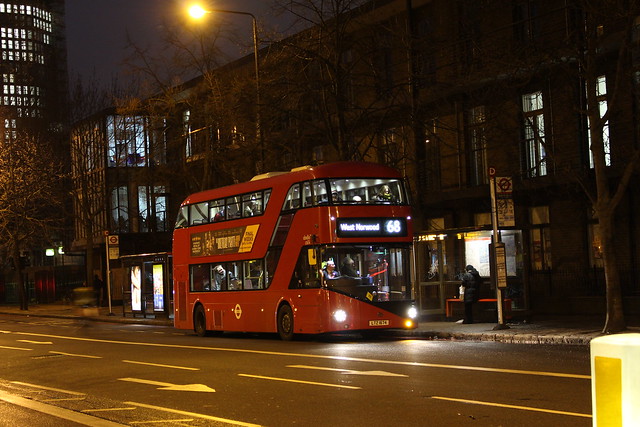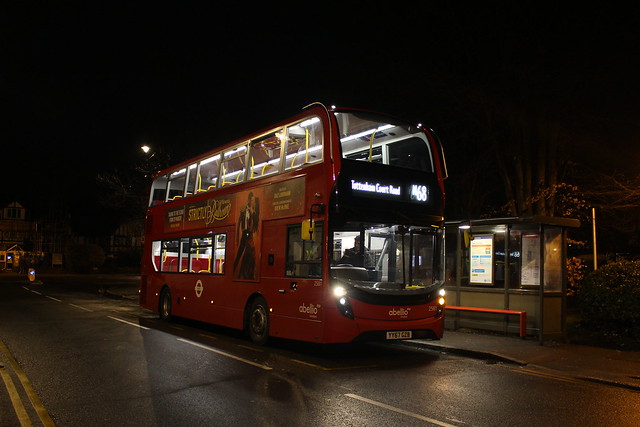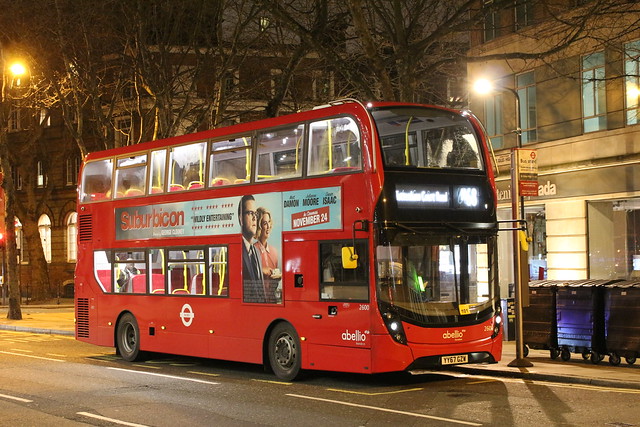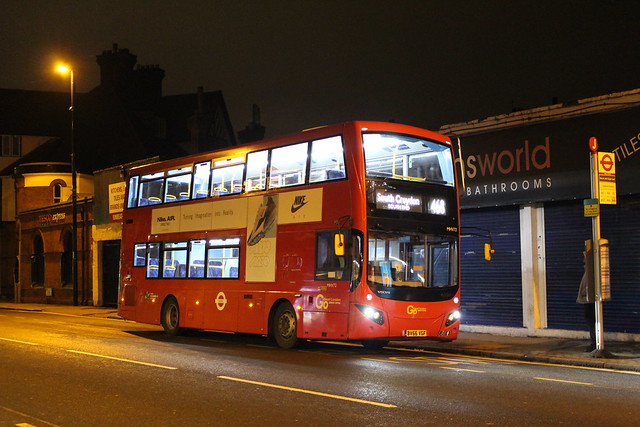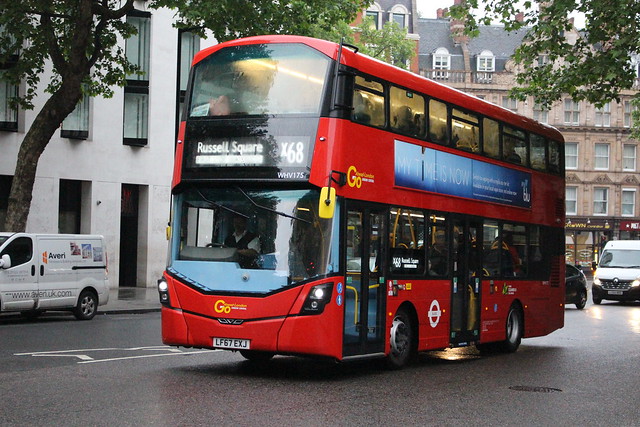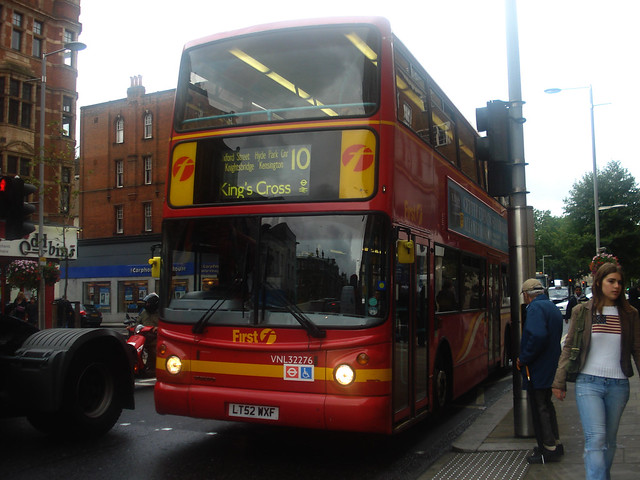
First London VNL32276 on Route 10, Kensington High Street, 01/09/2008
(© Aubrey)
VNL32276 is a Volvo B7TL/ALX400 ordered for the truncated Route 10 back in January 2003. The bus had a relatively short London career, being allocated to the 10 throughout. Other than being initially based at Wood Lane due to Westbourne Park being full when the 10 was gained, the bus had stayed at Westbourne Park (X) until the 10 was regained by London United. It also ran on other Westbourne Park based decker bus routes, including the 7, 23, 28, 31 and 328. Once the 10 was lost, the bus moved to Doncaster for use on First routes there, where it still is currently.
As the 10 has been covered in an earlier Picture Archive Post, this post is also another opinion piece, this time to do with the larger reduction of bus routes.
The current issue.
With the advent of the leaked Transport for London proposed Central London bus cuts, the current cuts already happening, and the endless frequency reductions, it seems the cuts to buses seem endless. Although there is a large funding black hole caused by previous Chancellor, George Osbourne, there surely must be better ways of dealing with it than just reducing the current network.
There is excess capacity within Central London, but the issue is that buses are unattractive within Central London. Congestion within the centre has only gotten worse over the years, making people move away from buses for short distance travel. If we reduce the current public transport infrastructure, then this makes public transport less attractive than before. People can point to Crossrail and the Northern Line extension as a diversion tactic away from the real fact that people are being drawn away from public transport currently. These schemes will bring more people in, but these things are in a few years, and the issue is pressing right now.
Buses within Central London also suffer from too little stand space. Many of the roads which are of over capacity are "last/first mile" reaches to parts of the route which are more popular. This includes the inner-Central London stretches of some of the mooted buses to be cut, including 14, 22, 53, 171, 172 etc. The bus network within Central London is designed to be interlinked. Most of the proposed changes are designed to remove these "interlinked" sections, where buses from the east/west and north/south meet. Inevitably, with this type of network, it leads to the system having many empty buses directly in the centre. This can be viewed as inefficient, and some cuts can be made.
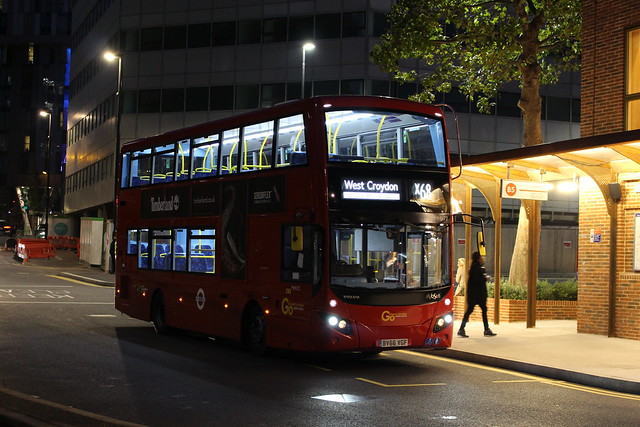
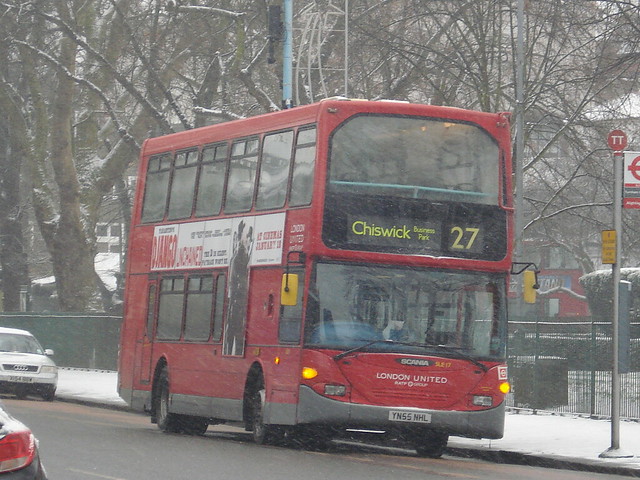
However, making large scale cuts (some of which ironically negate other cuts which were made a few years ago) can lead to a more patchwork network across Central London, therefore TfL need to be careful about what they cut. Another issue within inner London is the lack of bus stand space with the amount of increased buses over the years. It has led to severely awkward stands at the back of Oxford Street to serve Oxford Circus, and the proposal of the 27 to stand away from Hammersmith Bus Station, at Hammersmith Grove due to sheer lack of stand space at the main area of Hammersmith. Elephant and Castle is going to be turned into a massive array of bus stops which should really be a large smooth bus station, with the sheer amount of bus routes terminating at the area.
Buses has been noted to have a severe decrease of passengers over more recent times. This is a serious issue, and the more unattractive the first and last mile transport is, the more likely people will move to Uber, Addison Lee and other similar minicab services. The two mentioned have had previous public relations disasters recently, and it seems we are moving towards a wrong direction with transport within London.
At night, this leads to severe traffic nightmares throughout Central London as long queues around midnight-1am are full of taxis and minicabs plying for trade, simply because bus travel is not as attractive at night anymore. Night Tube has moved people underground, but there are some places where night buses need to improve, and most certainly not be cut. As London grows as a city, we should have more people on public transport, not less.
What seems to be currently done.
Currently, Transport for London are attempting to make public transport more attractive by advertising their own lines...on their own stations. If people are already at the station, then why would you advertise the exact service they are getting on. Meanwhile, the cycle superhighways being built compromises the existing bus network by squeezing existing bus and other traffic into smaller road space. Special cycle lanes do encourage cycling to work, which can only be good. To address the bus problem, they are cutting services with frequency reductions across the board. London is supposed to have a world class transport system, but surely it could be better. No money is being spent for bus infrastructure within Central London. New buses are as part and parcel of contracting bus services, but there are many bus routes which are being awarded to different companies with refurbished existing buses.
How do we actually make buses attractive again?
Any action required does mean that we need to spend money. Making bus travel attractive will bring more people back to buses.
Making it harder for other vehicles to access certain parts of London will 'force' people to take public transport. This could be done by actually making the Congestion Charge a full congestion charge. When the charge was introduced, it was a flat rate for all vehicles, which was discounted if you lived within the area or just on the outskirts of the zone (understandable, as it's basically charging you to drive no matter what if you live there). Recently, incentives have been made for vehicles with low emissions to be exempt to the congestion charge, completely negating the exact reason why the congestion charge exist. Personally, I don't care if your car is a new electric vehicle, or a 1993 diesel, if you are in a car, you could easily make that journey bus or train. Yes, there are some circumstances where public transport may be difficult to use (e.g. moving house), but most of these exemptions are one-offs, or costs that could be negotiated to provide better value for the trade/companies. Long distance travel can pass along the ring roads which exist solely for through traffic to by-pass Central London. Embankment is a very notable road which is used as a thoroughfare to keep vehicles away from the smaller Central London streets. However, with the Cycle Superhighway, the road has narrowed to the point vehicles are ironically using the more central roads to circumnavigate the Embankment.
Making bus priority measures more prominent, and longer bus lanes, forcing other traffic onto dedicated roads (e.g. Embankment). This allows bus journeys to be faster, thus journey times are faster. This means buses can be removed to retain the same frequency, with those buses being spent on outer London services.
Increasing fares. Yes, this may seem detrimental in the short term, but the £1.50 fare was initially envisaged as a fare for one sole bus. Now, you can travel on more buses for the same fare, thus increasing the value of that fare. However, with the hopper fare, it means that the fare vastly underpays the actual value of the journey. This is one of the primary reasons why there is such an exaggerated black hole in the funding for Transport for London. Once the Mayoral role has changed over to whomever the Conservative candidate is once Khan's reign is over, this unfortunately will be one of the inevitable results. Rising fares does make mobility of people difficult though, and as there are a lack of wage rises, I highly doubt this would be popular as people would need to spend more to travel.
Cutting some services which are easily duplicated is still required. For example, the extension of the 88 over the C2 route cuts minimal links, but covers the whole C2 route in the process in any case. However, the Hopper is now being made a "fits-all" solution to all broken links, and consultations time and time again all cry like as if this is the solution to the world's needs! However, if the journey times are so slow, it can ironically negate the hopper if it takes more than 70 minutes to make the connection itself.
If one is to cut routes, infrastructure and timetables need to be coordinated so that there are very small times for connections during the daytime, and that changes are convenient. Building a bus station at Elephant and Castle would be no easy task, but Vauxhall just shows that a large bus station could improve interchange, especially between the disconnected rail stations. The sheer amount of bus routes being changed around Elephant and Castle over the years, with more terminating routes could lead to an issue of stand space in the area. One could certainly go all White City-like and put the bus stands in the undercroft of a large development, but the stand space exists in one area, which is the main thing.
Transport for London have no easy solution out of this, but they've certainly shot themselves in the foot with their own errors of funding.
The full extent of the cuts can be seen here: https://853london.com/2018/08/15/tfl-plans-permanent-cutbacks-for-routes-53-171-and-172-in-huge-bus-axe-scheme/
The views of this post do not reflect the views of the rest of the WLTM Transport Blog, and are solely the personal views of the author.
Post by Aubrey.
All rights reserved © WLTMTB 2018