Showing posts with label Post by Joshua Perrett. Show all posts

13/02/2018

6th Year Post

Somehow, we've gotten to our sixth year of blogging and as traditionally so, we put a post out on the birthday of the blog. This year, the blog members are going to say what our favourite bus type are, and why.

Aubrey:
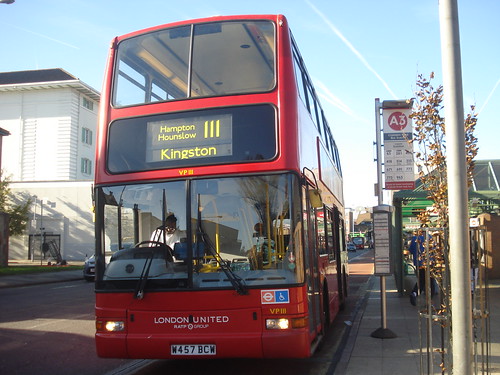
London United VP111 on Route 111, Kingston
London United VP111 on Route 111, Kingston Cromwell Road, 2013
(© Aubrey Morandarte)

Firstly, it's of course the sod whom made the blog in the first place. As we are a bunch of similarly aged sods, we'll most likely pick buses we grew up with. For my bunch, I've chosen the Euro II Volvo B7TL, with the Plaxton President body. From 2000 to 2013, the Volvo B7TL was the mainstay for Hounslow based double decker bus routes. These Euro 2 examples were ordered for the 120/H32 (the VAs were ordered for the 111).
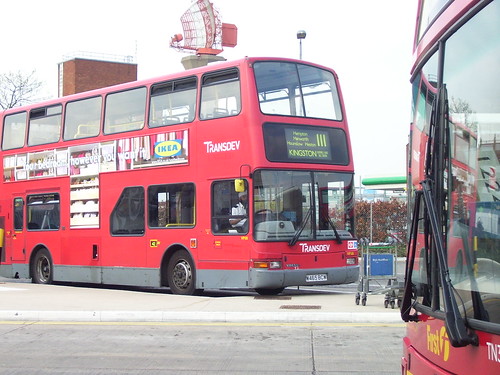
Transdev/London United VP118 on Route 111, 11/04/07
VP118 back in 2007 at Heathrow Central Bus Station on Route 111
(© Aubrey Morandarte)

These buses were the then new buses that were on the 111 at the time that I used to go to Heathrow to spot planes. As these buses were the buses which partly helped me get into buses, this is why they are good. They are also powerful enough when required, and the President body in itself was decent. The interior was basic, but good nevertheless. Without these buses, I wouldn't be into buses. Most first generation low floor deckers, in my opinion, were pretty good anyway, but as these buses were the ones that got me into buses, they have to be the favourite.


Lewis:
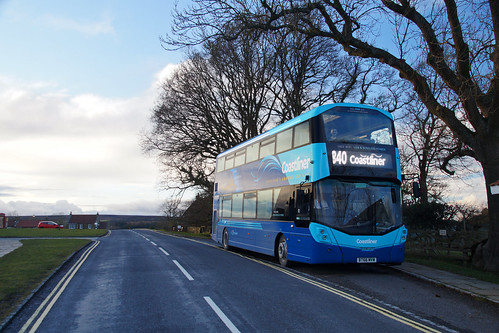
Time at Goathland
Yorkshire Coastliner 3637 at Goathland on a Whitby 840 service.
(© Lewis Nagle)

Next it's the sod who used to live in London but now studies up north. Having up till now mainly been on commercial bus services in the Home Counties (see my previous posts on services in Bucks & Berks) and then to the south of the capital in Crawley & Brighton, I naturally made it my task to go on more exploratory journeys and where better to start with the nationally famous Transdev Blazefield empire across the north? Last summer I was able to try out the Coastliner 843 to Scarborough, a tremendous high-pace ride through the Yorkshire countryside as well as the famous #the36, the WitchWay X43 and what is now the Aireline 60. Transdev pride themselves in high-quality services with a classy bus spec, friendly drivers and fantastic routes.
The latest in my adventures across the north saw me finally doing the best of the Yorkshire Coastliner services: the 840 to Whitby. A single Transdev DayTripperPlus is all one needs to bus it from Manchester to Whitby although it's a long journey, around the 5 hour mark.
The 840 is well worth it though, a superb scenic journey starting in Leeds and ploughing through the countryside to Tadcaster (with its bridge now reinstated since last year), the beautiful city of York, Malton and then out to Pickering, Thornton-le-Dale and Whitby. It's worth noting that on my journey, because it was a Sunday, the Leeds-Malton bit was a connecting 843. The scenery through the Yorkshire Moors is nothing short of stunning and the route even has to negotiate 25% inclines around Goathland, where the above picture was taken.
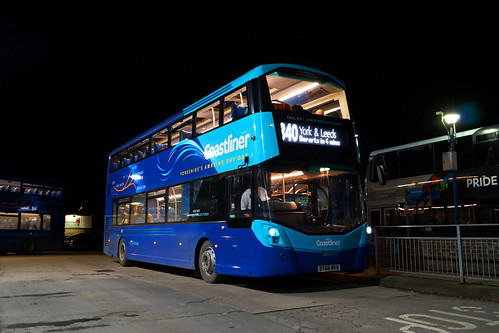
Four Malton Minutes
The same bus as above, now returning to York & Leeds on a small break at Malton.
Note the countdown on the destination display; a superb feature which I'm hoping we'll see more of in the future.
(© Lewis Nagle)

A little something about the buses: they're Volvo B5TL based Wright Gemini 3 double deckers new last December. Whatever your opinion is on the new face styling, it certainly suits the two-tone blue livery here. Inside the blue theme continues, with standard seating downstairs and high-backed coach-style seats upstairs. Tables, USB charging points and free wi-fi are available. The vehicles are even double-glazed so all of my journeys were remarkably toasty! The 5-litre Volvo engine copes fantastically on flats and downhill, regularly hitting its speed limiter at 56 mph, however as soon as you're going uphill it's much less happy. The bodywork by Wright has a real classy finish to it - and is very quiet on the move - but as ever rattles and squeaks still present a problem. It's an insult to the hours of thought gone into designing this spec for the bus to then rattle.
I don't wish to end on a negative note so I won't; I've been very happy working alongside the blog team for the last 6 years and hoping to many more! Lots of exciting things coming in 2018 too...


Jacek:
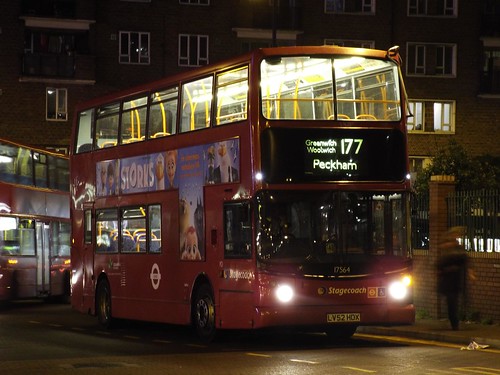
Stagecoach Selkent 17564, LV52HDX in Peckham on route 177
17564 on Route 177
(© Jacek Herominski)

Well, this is an obvious one. My favourite buses are what I grew up with. Even if one company ordered the same type back then, every batch always had its own character, its own sound, as a result of the varied specs everyone had. Nowadays I like all the first gen low floor deckers equally, but back then I was a Trident person. Which is why I've chosen my two favourite batches of Tridents.
The 52 plate is a Euro3 3-speed one, which were always my favourite ones for their musical Voith and the amount they thrashed up hills. Second place is represented by that Y reg. These Euro2 ZFs replaced a batch I didn't like, and came after my 52reg were cascaded away so basically took their place in my heart. That sounded overly romantic. Oh well, it is Valentine's Day soon.... (No)
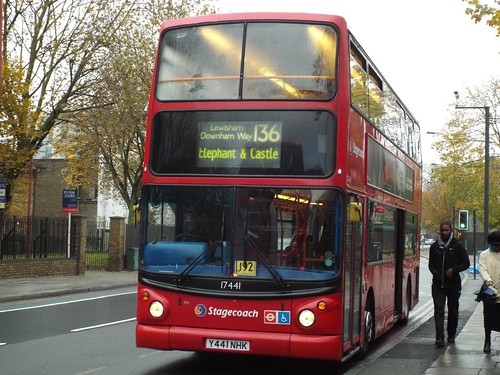
Stagecoach Selkent 17441, Y441NHK in Peckham on route 136 to Elephant & Castle
17441 on Route 136
(© Jacek Herominski)


Omar:

First Aberdeen 62166/Y631RSA | Route 3G | Mastrick Terminus | 14/02/2017
© Mohammad-Omar Diab El-Arab

Now, the resident crazy traveller. I'm the sort of person that loves a bit of everything, be it the cityscapes offered by routes down in London, the sea views of the Brighton & Hove Coasters or the weaving in and out of hills on West Yorkshire bus routes. In short, I love the variety you get from travelling on buses. Now, some buses suit this sort of variety better than others, ranging from being completely adaptable to being horrible to travel on! My personal favourite is the Mercedes-Benz O405N2, yet I don't actually have any photos of them. However, my second option isn't really all too bad, and that's the Wright Renown-bodied Volvo B10BLE, coupled to a ZF box of course.

Transdev Burnley & Pendle 1057/Y157HRN | Route M4 | Colne, Market Street
© Mohammad-Omar Diab El-Arab
A 5-speed ZF box coupled to Volvo's throaty 9.6 litre D10A engine churning out 245bhp not only sits happy in cities and calmer environments. It also provides a reliable and powerful base for country routes such as the Mainline M4, which was run by a mix of B7RLEs and B10BLEs when I rode it. The ride quality is usually very smooth and comfortable, and the bodywork is incredibly sturdy and largely rattle-free, a far cry from the current range of Wrightbus products. Sadly, a large number of them saw the end of the line before 2016 as the DDA rules kicked in to withdraw all non-compliant single decks from service. The ones that are DDA compliant, as well as the ones that have received modifications to become compliant, still soldier on to this day, some being as old as 18 years old this year! Since their introduction in 1997, as a low floor version of the already popular B10B, they have become the backbone of many towns and cities, and helped to kick-start the low-floor revolution, all while being generally reliable and loved by drivers, engineers, enthusiasts and passengers alike.


Alisha:
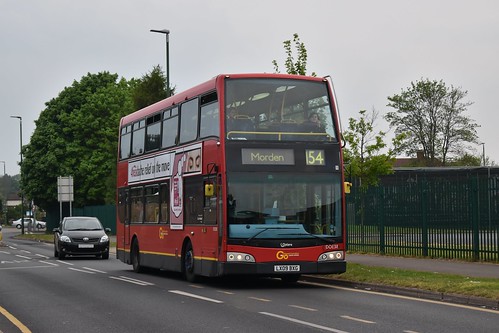
Go-Ahead London General: DOE38 | LX09BXG || 154: West Croydon - Morden
DOE38 passing through in Roundshaw in May 2017, sporting the iconic, sadly now lost livery
(© Alisha Juszczyk)

My favourite London bus type has got to be the Olympus - be it East Lancs, Darwen or Optare - doesn't matter. A top class double-decker body, and no wonder also a popular choice for tour buses thanks to their giant front glass upstairs. Out of all the chassis available for it, good old Dennis Trident 2 proves the ultimate fit. Shame only 55 ever ended up in London - the DOE class under Go-Ahead, and the singleton EO1 under CT+ which has since left the city and moved north. All of which had comfortable seating provided, alongside with spacious layout, and subdued lighting that creates a relaxing atmosphere.
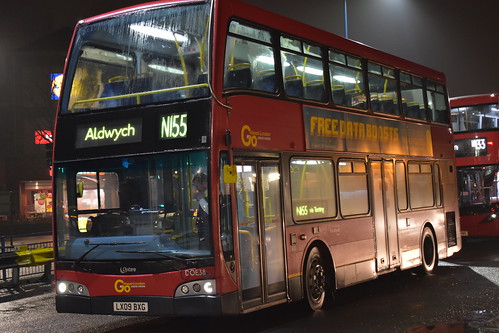
Go-Ahead London General: DOE38 | LX09BXG || N155: Morden - Aldwych
The same DOE standing at Morden about to start its journey on N155, a great route to test their abilities - taken February 2017
(© Alisha Juszczyk)

The low blind-box provides an acceptable means to rest your legs, and even something as trivial as the side windows that slant down to maximise the view out - it all shows what a great bodywork design this one is. Another clever feature I've always liked is the curved windshield on the upper deck which yields the following effect - at night you don't get any unnecessary reflections of the bus' interior when facing forward, unless you look up that is - and being able to inspect what's behind you without having to physically turn around is very handy. They are also mechanically sound, fast buses, and fortunately with kickdown enabled to make scaling of the numerous hills on their usual routes efficient. Their scarcity makes them even more precious and valued!


Tommy:
 
The bus type I had planned to talk about was the Plaxton President bodied bus, the type being local to me in Harrow since the early 2000s, TP/Ls then latterly VP/Ls at Harrow Weald with a batch of 17 still in use (what will be the last VPs left in the Metroline fleet, VP612-628!).  This would have been the perfect excuse to repeat my picture of TP446 from the 'Fifth Year' blog post, however, the President type has already been covered so to save repetition, I thought I'd do this piece about my next favourite bus type.
Now this is the ALX400 bodied vehicle that in London can be found with either an AD Trident or Volvo B7TL engine, my preference being the Trident version but both types I rate equally.  I cannot quite put my finger on why I rate ALX400s as much as I do bar it being an all-round pleasant bus.  The past three years have seen me use both the Trident and Volvo examples in North West London on a fairly regular basis which has cemented these vehicles' place on my preference list.  But, the ALX400 has also been mentioned in this post, and for the same reasons as above I do not feel it worth while that I discuss the same vehicle twice.
 
So, I shall move onto my next choice, and it's onto a bus that I have not really thought much about, but it's one that has dominated the London scene, but like the other types mentioned above, is fast becoming an endangered species in London.  The type is the Plaxton Pointer Dennis Dart SLF.  In its prime, the Dennis Dart was one of the most popular single deck buses from the late 1990s through to the mid 2000s.  They were just as popular as the Enviro 200 (and MMC "upgrade") has become since.
For me the Dart is aesthetically pleasing on the eye, and always had seats with generous leg room and decent amounts of seat padding.  I found the Darts rattled less than the E200s which replaced them meaning the Darts' fabulously whiny engine could be easily heard!  The lack of interior refurbishment in later years have also given the Darts a good nostalgia feel too, though that is not to everyone's taste!
 
London Sovereign DPS636 and Metroline DP1012 in Harrow.  March 2017
© Tommy Cooling
https://www.flickr.com/photos/127662272@N07/33241614882/in/album-72157677403851741/
  
When I think of a proper single deck bus, there aren't many types that come to mind, but it is the Dart that comes to mind first.  My exposure to Darts has been nowhere near that to the President or ALX400, but enough for me to rate it as high as third on my list.  The majority of my exposure had been the 02 plated London Sovereign Darts at Harrow (SO) on the H9/10.  Latterly I got very well acquainted with the Armchair imports at West Perivale, DP1009-1013, that made numerous appearances on the 395 in 2016 and 2017 after the E6 moved garages from West Perivale to Greenford.  Arriva Garston also has a small fleet of Darts (PDLs) that have transferred in from other London garages.  These have made very rare visits to the 258 and 340, with many other outings on the Harrow circular routes H18/19.
 
Arriva London PDL117 in Harrow.  February 2016
© Tommy Cooling
https://www.flickr.com/photos/127662272@N07/24674218834/in/album-72157665994971606/
 
There are more Darts still kicking around in London than the President class (and many many more with provincial operators), but these will all sadly be bowing out of service within the next year or so if not before when London's new ULEZ emission zones comes into effect.

 

13/02/2017

5 Years of the WLTM Transport Blog

13/02/12, 0809hrs. That was when the WLTMTB, back then as the WLTM Blog was first formed.
5 years later, 11 people have come to the blog. Some have stayed, some have gone. But what's here is something that I just can't imagine back then.

This year, we are giving you a tad about a recent/notable photo that we have taken over the past few years, and a tad about ourselves.

Aubrey:
111 & N9
(© Aubrey)

This photo may be each an allocated working on these two routes, but without these two bus routes, I wouldn't have ended up as a transport enthusiast, or be the fairly interesting person that I am today. SP7 on the 111 is a normal working, with the bus starting out at Shepherd's Bush for the 148. Through allocation at Hounslow Heath on the H91 (my third favourite bus route), it is now at Hounslow, allocated to all double decker routes. SP170 on the N9 is actually a part of a batch for the 111. Both are OmniCity double deckers with different chassis/engine combinations. SP7 is a N94UD, SP170 is a N230UD.

The two routes are personally important, and thus are my favourite routes. The 111 used to be the way I'd go to get to Heathrow Airport, where I used to watch planes in the early 2000s. Through the various buses on the 111 (B7TL with ALX400, President bodies, as well as the odd step entrance bus), I started to become interested in buses, along with other transport modes. Since then, I have gained more knowledge, experience and time to the point where I felt I could write about it. However, I started a tad late, in 2012, when I did think about it since about 2007! Oh well, I finally started to gain friends who were enthusiasts, and since then, things have gotten on pretty well. University might have hampered the ability to write posts as frequently as I have done before, but I've still got the motivation and the passion to continue with the blog. My night photos have only gotten better over time, with increased practice on all-night night bus observations, as seen on Flickr. The blog has grown massively over the past few years, and it's been a great, albeit slightly rough ride! I never knew the ramblings about transport would mean something, but the days out associated with this blog were nothing short of amazing!
The WLTMTB wouldn't be where it is today without the rest of the team, past or present.
A group of friends who are pretty awesome in some way or another!

Thus thanks are in order for James, Lewis, Josh, Tom, Jacek, Anthony, Omar, Tommy, Felix and Patrick for the past, present and the future of the WLTMTB, as well as the wonderful time as friends!


Lewis:
Boris the Alien
(© Lewis)

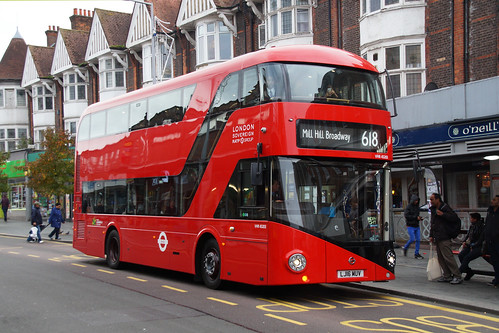
Introducing the VHR, a somewhat prototypical vehicle of which there are currently only 6 iterations. They’re a modge of the standard Volvo B5LH / Gemini 3 and the New Bus for London, which iron out the functional flaws of the latter and the ghastly design of the former. I really like them – they’re a mix of something traditionally London (the interior, for example, is gorgeous) but yet they’re a conventional bus.
This particular vehicle, VHR45203 had had a bit of a history even before it had entered TFL service. Prior to this picture it appeared at the Bus Driver of the Year 2016 event in Blackpool and was next seen on the 23A at Imber.
The photo captured above was the bus’s first London service working – yes it entered service on school route 618 and not the high-profile 13 as was expected. It had also had a mini-makeover with new fleetcodes and logos, as well as a new registration – LJ16MUV from LJ16EXD.
The rest of the 6 VHRs gradually entered service in the following couple of months allocated to route 13. Since then a strange reallocation has seen them switch to the 183 – quite why I’m unsure but rumours have suggested it’s to do with the fact that LTs have are open-boarding whereas these do not, leading to fare-dodging. Whether or not they will move to the 139 in April remains to be seen.
With the new Mayor stopping orders for the bigger LT, I somewhat doubt if operators will choose to opt for the lookalike SRM given its political affluence, so perhaps there will only ever be 6 of these great vehicles. Others seem to prefer the more popular ADL version – the Enviro400 City – but I think this is far classier. A London bus on a Volvo chassis, where else do you look?!

This is my contribution to the 5th year post on this blog. I don’t write much these days, but with work becoming increasingly more challenging it’s difficult to find time to do other things. I’m also becoming less inclined to follow the updates within London, vehicles are all very similar and an operator change simply isn’t particularly interesting any more unless I’ve a personal connection to it. If anyone reading this feels the same as I do, find another interesting place. I often venture out into Buckinghamshire, where buses travel far faster and are generally better vehicles too! Commercial operations are seriously taking hold at the moment to grab as many passengers as they can what with constant government and council cuts, so make the most of it!
I hope to publish a thorough Carousel update in the coming months, which as most of you know is the company I like to involve myself with. I hope you enjoy reading the rest of the 5th year post and what my fantastic friends and co-writers have to say!

Josh:
The first silver service to Oxford
(© Josh)

It’s been 5 years for the blog and almost as long for me too. I’m Josh, I joined the blog back in 2013 and have been posting ever since….. Yeah that was the plan at least.
I’ve not written for the blog in a very long time, this certainly being the first piece in at least a year. My interests over time have changed, moving away from the bus focused side that the blog mainly covers. I’ve also been rather occupied these last few seasons not finding any spare time to write, which I do enjoy doing.
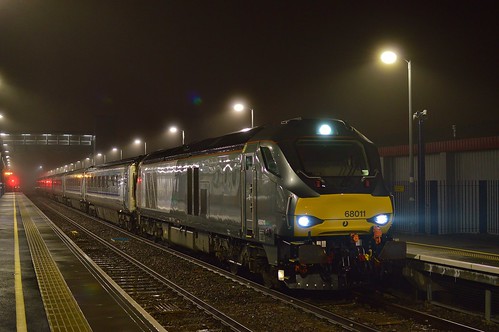
The photo I have chosen is this. The first 68 set to venture past Oxford Parkway in passenger service. (This involved a 3am coach just for this working). Being my favourite class of locomotive, I couldn’t pass up an opportunity like this. Even with only a half hour nap on the coach!
I have some spare time now these days, so I hope to get round to writing for the blog again. I hope you continue to read the blog, we couldn’t be here without you.

Jacek:
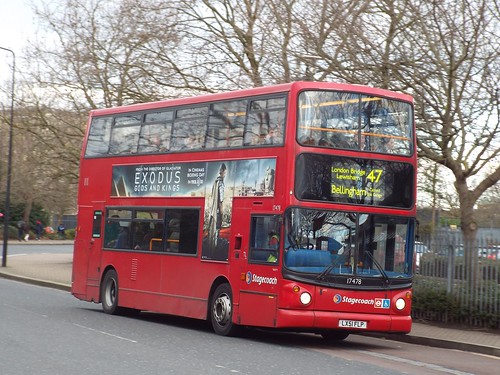
Last of a kind - Stagecoach Selkent 17478, LX51FLP at Surrey Quays on route 47 to Bellingham
(© Jacek)

I joined the blog a bit later than most of the others (still about 2 years ago now) so with that and the amount I write on here, I may not be the most prolific blogger. Generally I like to wander out to capture old (more interesting) buses out and about, or just for fun. So I'm not always there at most service changes. As times change I've grown less interested in London's bus scene and more into buses outside London as I find journeys there more enjoyable. Then again, which enthusiast doesn't?

I'm quite a nostalgic person, as anyone who knows me can tell. So instead of choosing my personal best photo, I chose that slightly blurred photo of a Euro2 Trident on the 47. It seems like only yesterday that these lovely buses were dominating east and south-east London, practically every corner I took I'd see one of them. By the time that picture was taken, they were going the way of the Titans and Olympians they had replaced back in the late 90s/early 2000s. So that was a good excuse to spend a chilly Christmas Eve morning outside. As the Flickr caption hints at, this was the last Euro2 Trident in TL, and later became one of the last in London running rail replacement extras on the 47. It's now sadly turned into Coke cans. Tridents in general, along with the other first-generation low floor buses, are largely vanishing from London. A shame, the newer stuff is less interesting *cough* 1000 almost identical LTs *cough*

Omar:
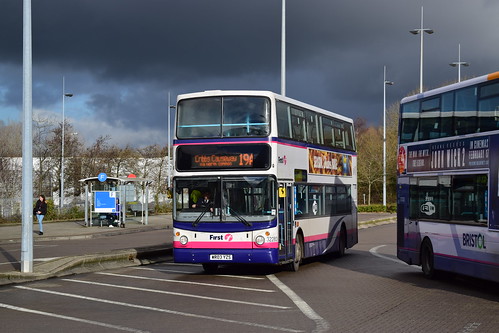
First West of England 32283/WR03YZS | Route 19A | Cribbs Causeway
(© Omar)
I honestly think this is one of the best shots I've taken. Playing around with your camera does indeed get you somewhere! I may as well put this here as well, not only for the purposes of being here for the sake of it, but also as a reminder that not just the blog itself, but each member here, grew and prospered.

So, I'm pretty much the newbie here. It's pretty much safe to say I've slotted in here really quickly and came to get along very comfortably with the other members (okay that was a bit of a lie, I've known the members here for a while and bear in mind that the blog is indeed formed of a group of friends!) It's quite unbelievable how quick 5 years can pass. It feels like only yesterday when I was in year 5 revising for my SATs, and now I'm pretty much the resident crazy traveler of my family. Traveling has always been a big thing in my life and my love of traveling lured me into becoming a transport enthusiast. Upon joining the blog, I could finally put my wanderlust to good use. Sometimes, I'd travel alone, but it's truly best with others, and rarely does it get better than with other members on the blog!

Tommy:
Rarer then a good TfL service!
(© Tommy)

Whilst it's nowhere near the best picture I've taken at night, the sheer rareness of the working more then makes up for the picture quality.
Here we see Metroline TP446 on the only occasion that a TP slipped out onto the 16 at Kilburn Station back in November 2015. This was at the time when TPs were still in use at Cricklewood Garage following the 558 Victoria line rail replacement in the summer, but their appearance on anything other than the 32 or 210 was extremely rare. The TPs were being used as cover for a lack of LT vehicles that were due for the 168, which was running with hybrid E400s at the time. The handful of TPs were mainly on the 32 and the 210, but one had made its way onto both the 139 and 189 too during their short spell at Cricklewood. Those of you who follow me on Flickr may also notice a link to this post and my page; the link being my Flickr handle which is TP446, taken from this very working!

The TPs arrived during my early days at Cricklewood and consolidated my liking of President bodied buses. This was a time when my local route, the 140, was fully allocated with Plaxton President Volvos! All the TPs that were at Cricklewood within their first month or so of entering TfL service had been copped by me; both riding and on camera.

Finally I should probably give a little about me too! I have the luck of both being interested in transport, or working for it too. By trade I design bus blinds, both smartblind paper and LED, in addition to service maps and route performances, at present.
My interest in transport began from a very early age and back then consisted mainly of buses. Going back I can still remember the old London United 140 Leylands, plus the mixture of Sovereign cream and blue, and orange on the 114! When I got my first camera nearly five years ago, I mainly focused on trains, and the London Underground in particular. Since I started working for the buses I rediscovered my bus passion and switched back to covering bus stories, though I do my best to keep the trains side of me going too!
I am also one of the newest members of the blog, and I'm coming up to my five month anniversary on the team too! I have already done a couple of posts, the BusExpo one being my first! My main area of coverage is NW London ranging from new vehicles to service changes, to just your everyday shots! Both Central London, and parts of SW London can come under my radar too.
Here's to more posts in the future and to however many more years on the blog. Who knows, this could still be my picture of choice come the Ten Year anniversary ...

And now, we introduce with an expansion into Essex, two new members of the WLTM Transport Blog!:

Felix:
IMG_8982
(CC Felix)

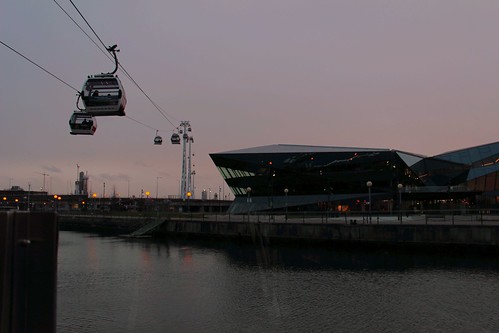
I'm Felix, I hail from Southend in Essex and I enjoy photography and computing, and obviously transport. I really love the light in this photo. The sunset looks absolutely gorgeous, and the street lighting provides some lovely orange hues. The water reflects the sky, and the Air Line cuts through it, which, despite not being pushed by the new Mayor, continues to ferry tourists across the river.

Patrick:
DSC04889
(© Patrick)

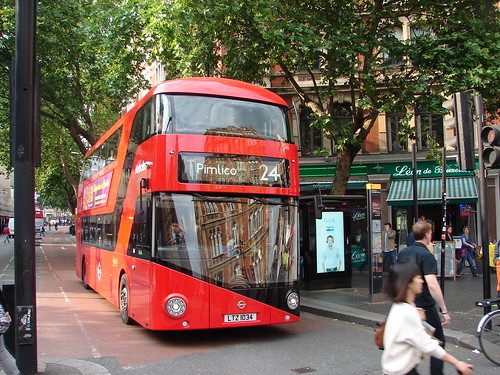
I waited with much excitement for the ‘New Bus for London’ to be rolled out at the time I took this photograph. I was eager to see the return of the Conductor or “CSA” as TfL put it. Route 24 was one of my local routes during the time the NBfL was introduced. Having lived most of my life in the Mornington Crescent area, I familiarised myself with the variety of routes that passed near my street, many of which now too operate with NBfLs.

I’m Patrick, a London Transport enthusiast but also interested in trains and buses outside Greater London. I travel around London on occasion, by road as well as rail.

It's been a wonderful 5 years being on the internet, and members old and new have come and gone, but the WLTM Transport Blog soldiers on. We definitely would not have done it without you, the readers. Thank you all, from the eight-strong WLTM Transport Blog team; Aubrey, Lewis, Josh, Jacek, Omar, Tommy, Felix and Patrick.

08/03/2016

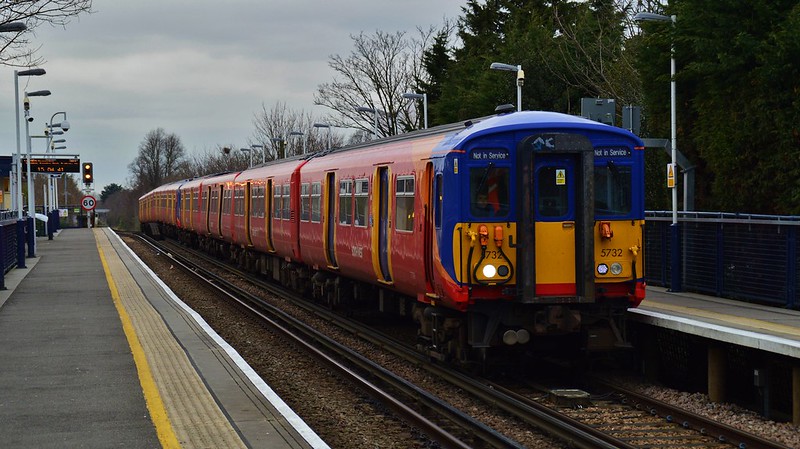
Flower Power. Coming soon to South West Trains. (8/3/16)

Flower Power!
South West Trains have recently began to fit their Class 455 units with new traction packages, to replace the worn out EE507's currently in use under these units.

These new traction packages will improve pull off speed, often a factor criticised regarding the fact that these are suburban units, yet the acceleration is very poor. It is also projected to save a large amount energy, and money too. Regenerative braking is also fitted, further improving the efficiency of these units. Fitting new traction packages will also free up space in maintenance, allowing Wimbledon Park to receive 30 new Class 707 Desiro City trains, without this space an new depot would have needed to have been built.

This isn't just the only piece of new kit on these units. New WSP equipment, with European standard computer algorithms has replaced the outdated technology currently fitted to the fleet. This will help curtail the frequency of wheel flats, and extend the maintenance period from 10,000 miles between exam, to 15,000 miles between each exam.

With the current test units, 5732 and 5870 performing better than expected, only time will tell till we bid farewell to the EE507.

DSC_0093

23/09/2015

The end of London Midland's 321s. (210915)

Binspirational. 321413 stands at Watford Junction 1 week before withdrawal ©LT3001
As of Sunday 20th September, the last 321 under London Midland run on the St. Albans Abbey line. All of London Midland's Class 321s (Bins) will be replaced by former Thameslink 319s.
The rather lazy logo application to a 319. ©LT3001

319216 was the first to run, replacing the bin at 16:04 from Watford, and remained on the line until the last trip. The unit, as the others are, are still in Southern colours, with LM decals on the sides. The units will be repainted into the appropriate livery in due course. One unit is sporting the new livery at present, but it isn't finished yet.

London Midland even advertised that the first 319 was coming to the line on their PIS systems, whether any ordinary people took notice is another matter however.

319003, 319216, 319429 and 319460 are the units transferring to London Midland from Thameslink. As well as operating on the Abbey Flyer, these units will also operate peak time services to/from London Euston to Watford Junction, Milton Keynes, Tring and Northampton.

So some of you may be asking, where will the 321s go? Well two are destined for London Overground for the Romford-Upminster line, which will later become TfL Rail, and the rest are destined for Abellio Scotrail to join the Scottish Class 320 units of similar design.

The old replaced by the old. 319216 stands at St. Albans Abbey displaying Northampton for some peculiar reason. ©LT3001
With these units now over half way through their serviceable lives, and having had worked with Network SouthEast, Connex South Central, Southern, Thameslink, First Capital Connect, Northern Rail and London Midland, and for plans* to later be used with Great Western Railway and Southeastern, who knows when these units will leave UK service for good...

*= Plans mean plans. Nothing is set in stone.

23/08/2015

Hats Off to Uno!

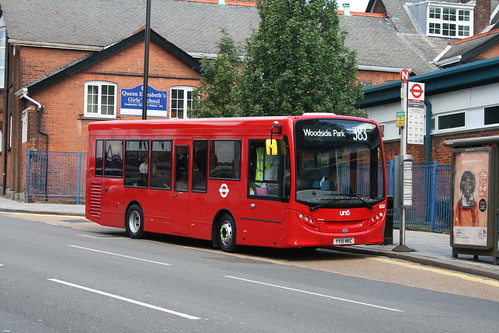
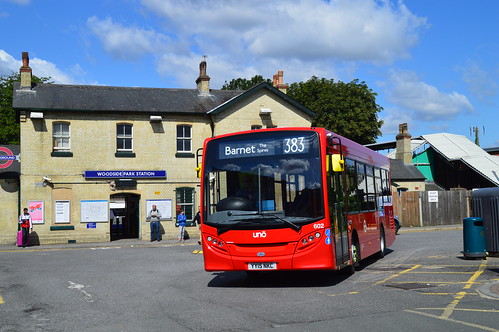
Route 383, a small residential route to the north side of London has had a big milestone. A university now runs the bus route. More specifically, the arm-length company of the University of Hertfordshire, Uno Buses.

TfL 383, by the University of Hertfordshire
Uno 602 on Route 383, High Barnet Station (© Aubrey)

University Bus, based near the University of Hertfordshire in Hatfield (hence title) is the second largest bus company operating in Hertfordshire, only behind Arriva the Shires who, of course, are the current heir to most of what was formerly London Country and indeed, London Transport Country division.

Bloody UNO, coming over here, taking our routes!
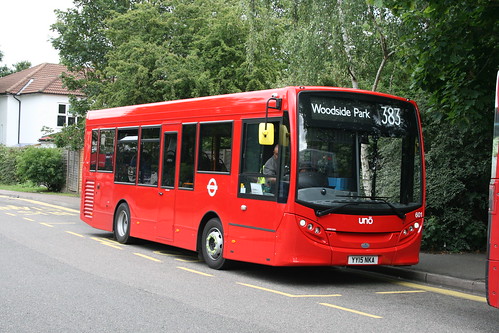
Uno 602 on Route 383, Woodside Park (© Josh)

Bus 602 seemed to be pretty well photographed for some odd reason. Anyhow, it is one of the last pre-MMC Enviro 200 batches for any operator, being delivered parallel to the ones in Birmingham for the 37 there.

Over the Kerb
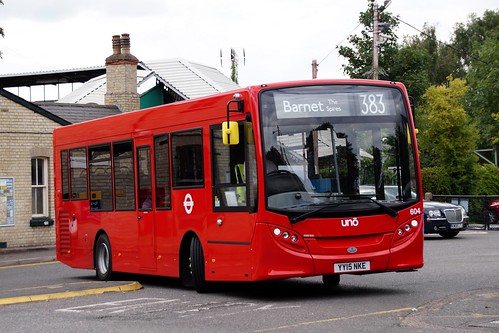
Uno 604 on Route 383, Woodside Park (© Lewis)

The entry of a new bus operator from outer London shows ambition from Uno's side, and the fact that logos are getting smaller in London! The Uno logo is tiny compared to where it is placed.

Uno 601 on Route 383, Barnet Spires
Uno 601 on Route 383, Barnet The Spires (© Aubrey)

Overall, Uno have done a decent job. The buses are presentable (as it is most of the time with Uno anyway). The bus drivers are the highest paid drivers in the company as the TfL driver rate is higher than the highest rate at Uno not doing TfL work. The drivers have University of Hertfordshire staff cards (obviously). The service is getting better, and the pink? Well, the pink is in the folders some of the drivers carry. And yes, unlike the buses, this post is kinda late.

06/07/2015

A Major Model Mouthful

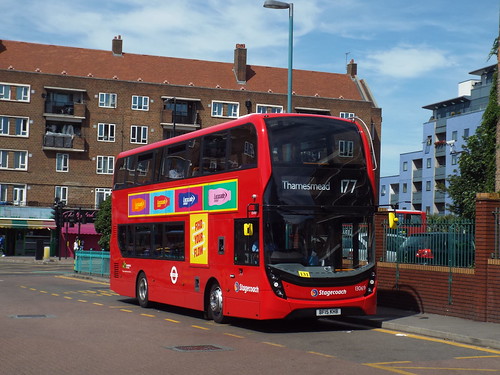
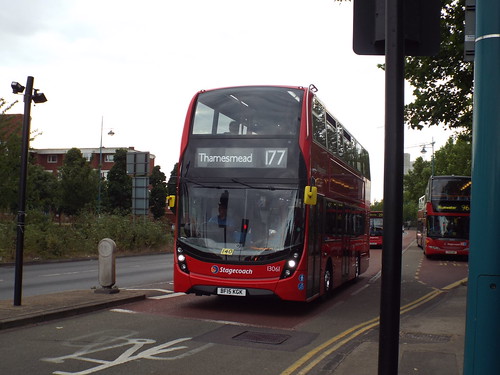
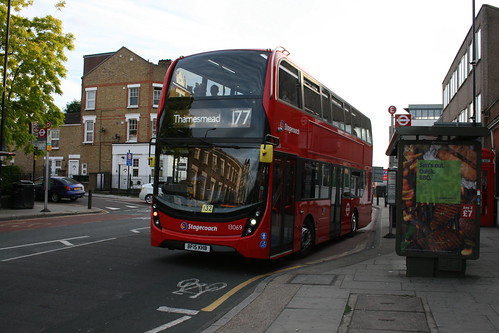
Stagecoach Selkent 13069, BF15KHB in Peckham on route 177
13069 in Peckham. (© Jacek)
The 177 is a route.

It's not particularly notable for hills or fast empty stretches, but it does go from Peckham to Thamesmead and is quite busy. The 15th of June saw something actually notable happen on it, as the route now has London's first Volvo B5LH/Alexander Dennis Enviro400 MMCs (bit of a mouthful) on it. These buses are quite fast, good looking and comfortable. The usual B5LH problem of being slightly cramped at the rear on the lower deck persists, but these can be faster than their Gemini bodied cousins on the 53 with especially powerful acceleration.


However there was still the odd technical issue as the bus I got on (13062) had a piece of paper covering the Oyster reader saying it wasn't working. Some other buses make a loud whine from the battery.

Brand new - Stagecoach Selkent 13061, BF15KGK in Plumstead on route 177 to Thamesmead
13061 in Plumstead on its first day. (© Jacek)
Anyway a few weeks later the Volvos have mostly settled in, with about 70% of the route now being B5LHs while the previous Scanias have now started to go on the route more now they're unallocated. 4 buses are yet to enter service at the time of writing. The occasional Gemini working has reared its head while some Tridents and Scanias have transferred to various East London garages.


Now for some other pictures:
17838 in Woolwich. (© Josh)

Most of PD's original Tridents moved out before the MMCs came, so cascaded ones made up the numbers.

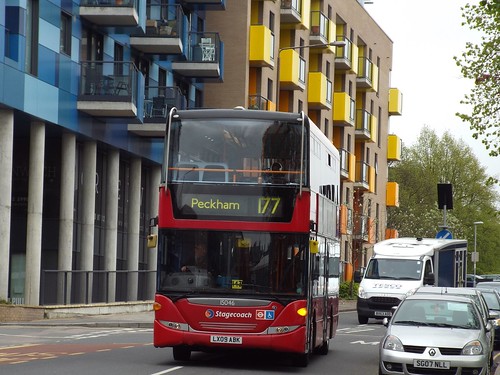
Diversion - Stagecoach Selkent 15046, LX09ABK in Lewisham on route 177 to Peckham
15046 on diversion in Lewisham. (© Jacek)
These Scanias were the allocation on paper, but in practice were almost all on other routes. PD retain some Scanias for route 51 (on paper) and in practice 96.

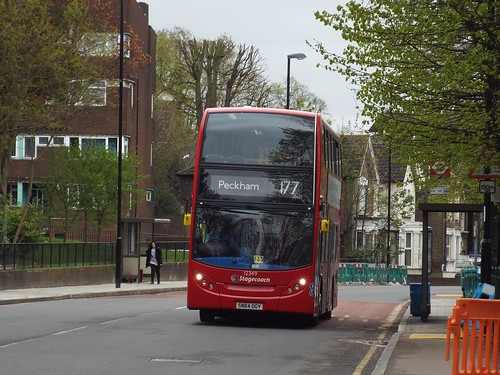
Diversion - Stagecoach Selkent 12349, SN64OGY in Lewisham on route 177 to Peckham
12349 on diversion in Lewisham. (© Jacek)
Enviro400s were on the route daily as well, both diesel and hybrid examples.

13061 in Woolwich. (© Josh)
Stagecoach Selkent 13067, BF15KGY in Peckham on route 177
13067 in Peckham. (© Jacek)

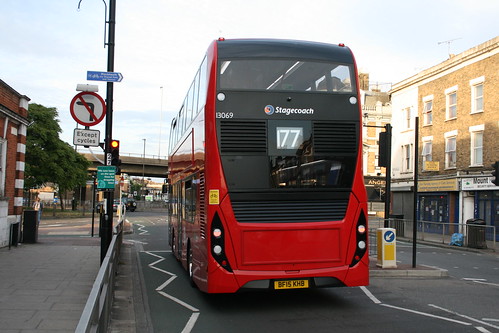
Rear of Stagecoach London 13069 on Route 177, East Greenwich Library
13069 at East Greenwich Library front & rear (© Aubrey)

IMG_6790
They seem to be good buses in the flesh, and ride well. Stagecoach have some pure ADL ones coming up within the next week or two - the ones for the 498, which are diesel ADL Enviro 400MMCs. A tad less of a mouthful to say than Volvo B5LH/Enviro 400 MMC. Oh, and the bell rings thrice weirdly.

30/06/2015

The Bailiwick of CT Plus. Channel Island #1 - Guernsey (24/06/15)

HCT Group in London are known for their less than professional operation out of a Portacabin in an Arriva depot, however they run the Channel Islands only bus services. Liberty Bus in Jersey, and buses.gg in Guernsey. buses.gg (Yes, all lower case) run a fleet of around 40 buses, comprising of 8.9m Caetano Nimbuses and East Lancs Mylennuim Darts across 19 routes. Many routes interlink with each other, but all bus routes (Except for Parish Link P1) eventually terminate at St. Peters Port, the Heart of Guernsey. 
In my opinion, the best way to see the island is by bus. Fares are £1 per person per trip, or at £4.50 for a day ticket, they are fantastic value. I personally recommend the 91/92 (Guernsey Vayeux) routes. They circle the Island in a Clockwise (91) and Anti-Clockwise (92) fashion along the coast.

The buses used in their operations are about the same standard as most other vehicles in the UK. The vehicles on the island have to be small due to the islands continuously narrow roads throughout. Although most of the routes are crying out for a capacity increase, there simply is not the means to accommodate it. Though it may be fairly obvious, buses are often filled, with standing passengers throughout, so make sure you arrive early to the bus stop to ensure your place. After all. You don't want to wait an hour in the middle of nowhere!
 Click here to see more photos, as Blogger is being a pain and will refuse to work properly.

I will be returning to Guernsey, and will be visiting Jersey in the near future, so watch out for more of these posts! -JP

29/06/2015

The 498 gets an Upgrade.

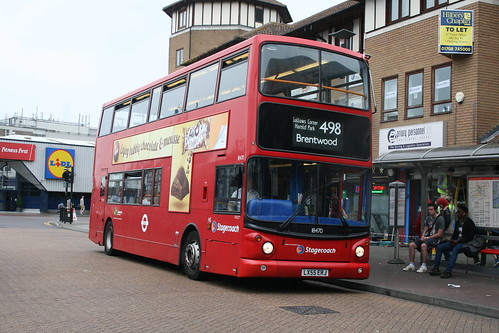
This weekend, it was the turn of the 498 and the 499 routes to leave Blue Triangle, and Arriva Thameside respectively, to join Stagecoach London's ever growing empire. With the Enviro 400 MMCs (the first diesel batch for London) being commissioned for the 498 as we speak, some 55 reg tridents have covered for them.

Stagecoach London 18476 on the 498 in Romford at Queens Hospital (© Josh)

18476 seen on Brentwood High Street (© Josh)
At current, the MMCs are not expected to enter service for at least a week, to allow the fleet to be commissioned, and for drivers to familiarise themselves with the layout and be type trained on these new vehicles.
Since the Stagecoach takeover, the 498 has run much better. The layover time has increased, allowing for any A12 delays to occur. The running time has also increased to also allow for traffic and stopping along the A12.

Stagecoach London 18470 on Route 498, Romford Station
18470 at a fairly rainy Romford Station (© Aubrey)

The controlling of the route has also greatly improved, and the PVR has been increased from 5 buses, to 6.

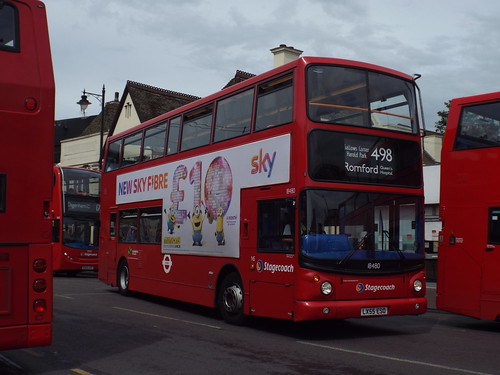
Stagecoach East London 18480, LX55ESO in Romford on route 498
18480 is the third bus on the second day of the 498 at Stagecoach (© Jacek)

The Sunday service still runs every 30 minutes, and with a PVR of 3.

The 498 began on Boxing Day in 2005. It was initially run by Arriva Southend with Dennis Pointer Darts for the first few months,then when DLAs became avaliable, they were used on the route. All this whilst the Wright Cadets ordered for the route were being built and delivered. It ran half hourly on Monday-Saturday daytime journeys, and hourly in evenings and on Sundays. It was introduced to replace the 351, and the 551, and the average scheduled journey time from Romford to Brentwood was around 25 mins, nearly half of what it is today.

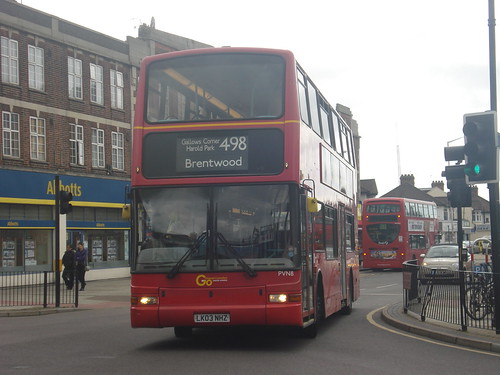
Blue Triangle PVN8 on Route 498, Romford Station
Blue Triangle PVN8 on Route 498, Romford Station (© Aubrey)
It passed to First London in June 2008, with initially new Enviro 200s (see Picture Archive Post). Soon, it was converted to double deck with Enviro 400s. 

On the 22nd June 2013, Go-Ahead London (Blue Triangle) bought out DM and 498 moved to BE. With it, the term "allocation" flew away. Any double decker at BE could be found on the 498, except possibly the East London Transit buses. Indeed, the first day brought ex-First London Volvo B7TLs from NP to the 498.

But the assortment of buses is now gone, and Tridents have taken their place albeit temporarily until the Enviro 400MMCs arrive.


However, the 499 is another story. Which shall be continued in another post.

11/06/2015

LO, LO, LO ('ello, 'ello, 'ello)

London Overground is only 8 years old but it has now established itself as one of the nicest and most reliable railways not only in the capital but in the entire country with ever-high percentage values on their punctuality and increasing customer satisfaction ratings.
The story began in 2007 when TFL took on the inner London suburban services operated previously by Silverlink, and this included:
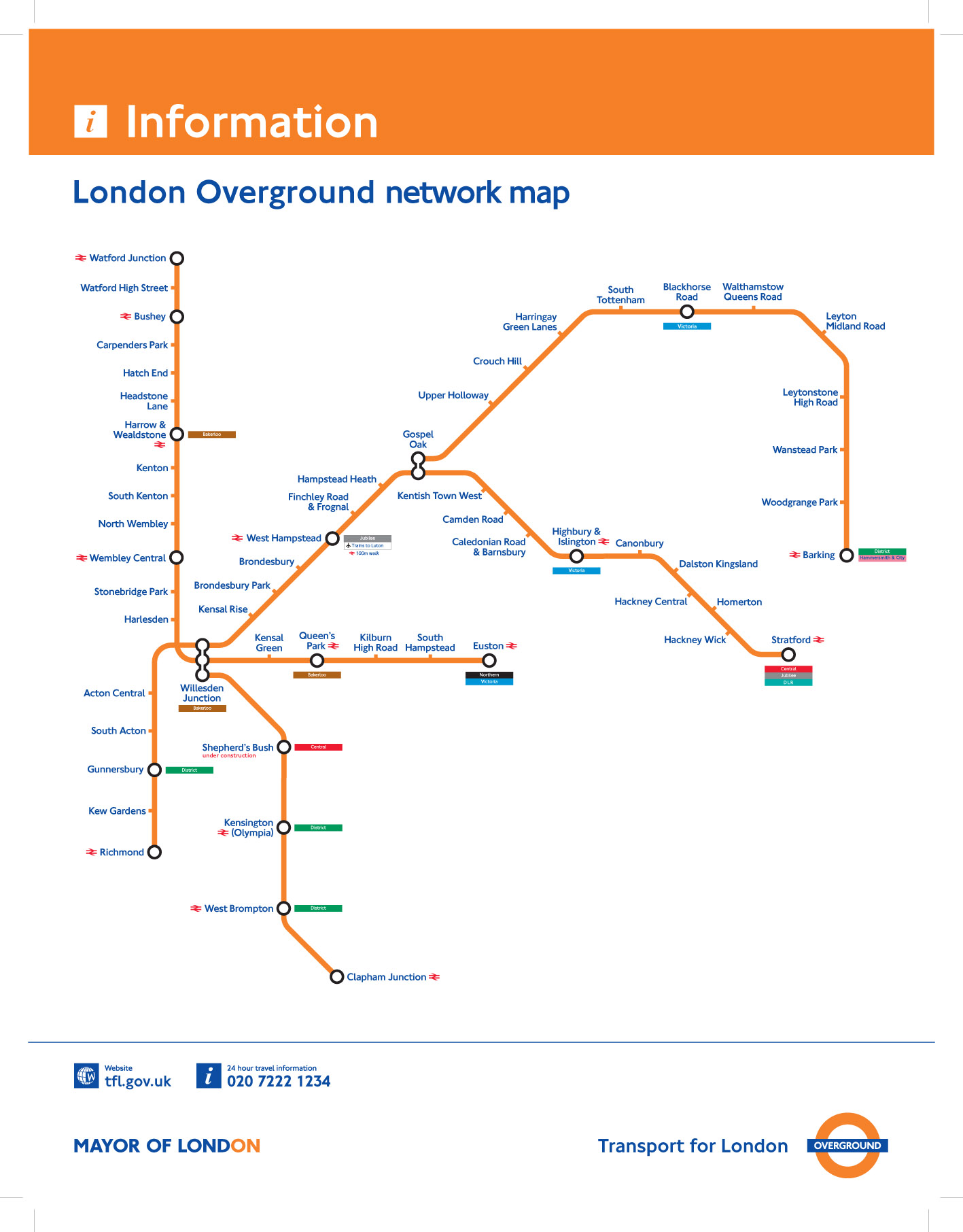
- North London Line: Richmond - Stratford
- West London Line: Clapham Jct - Willesden Jct
- 'GOBLIN': Gospel Oak - Barking
- Watford D.C.: Watford Jct - Euston.
This comprised a whole network encompassing 56 stations and these would over the next 4 years be completely redone with new paintwork (including a vast amount more orange than previously), new facilities, new signage and, most importantly, better accessibility.
In 2007 the lines were equipped with NR class 150, 313 and 508 units which were deep cleaned and had all the Silverlink branding removed; replaced by stickers proclaiming the new branding 'London Overground.'

Class 378s stand at Richmond, 6th April 2013.
© Lewis.
The class 378/0 dual-voltage units entered service in 2009 on the NLL, WLL and Watford branch in 3-car formations, completely replacing the 313s and 508s by late 2010. In 2010 the class 172s were also introduced to replace the 150s on the Gospel Oak - Barking route.

In April 2010 the Overground network was greatly expanded and the completely rebuilt East London Line (formerly part of the London Underground; closed in 2007) opened ahead of schedule between Dalston Junction and New Cross / New Cross Gate. The line made use of the old Broad Street viaduct south of Dalston Junction, and the famous Thames Tunnel in Rotherhithe built by Brunel which was the first known tunnel to be built under a navigable river. A month later the full line opened south of New Cross Gate to Crystal Palace and West Croydon. The ELL is operated with four-car 378/1s, which unlike the previous units do not feature pantographs and thusly cannot operate on AC-powered lines.

In late 2010 all 378/0s on the original LO lines became 378/2s as they all had a fourth car added. Sections of the North London Line were closed in that year to allow for platform extensions to be build to accommodate the longer trains, and the process was accelerated by the introduction of the ELL sets.

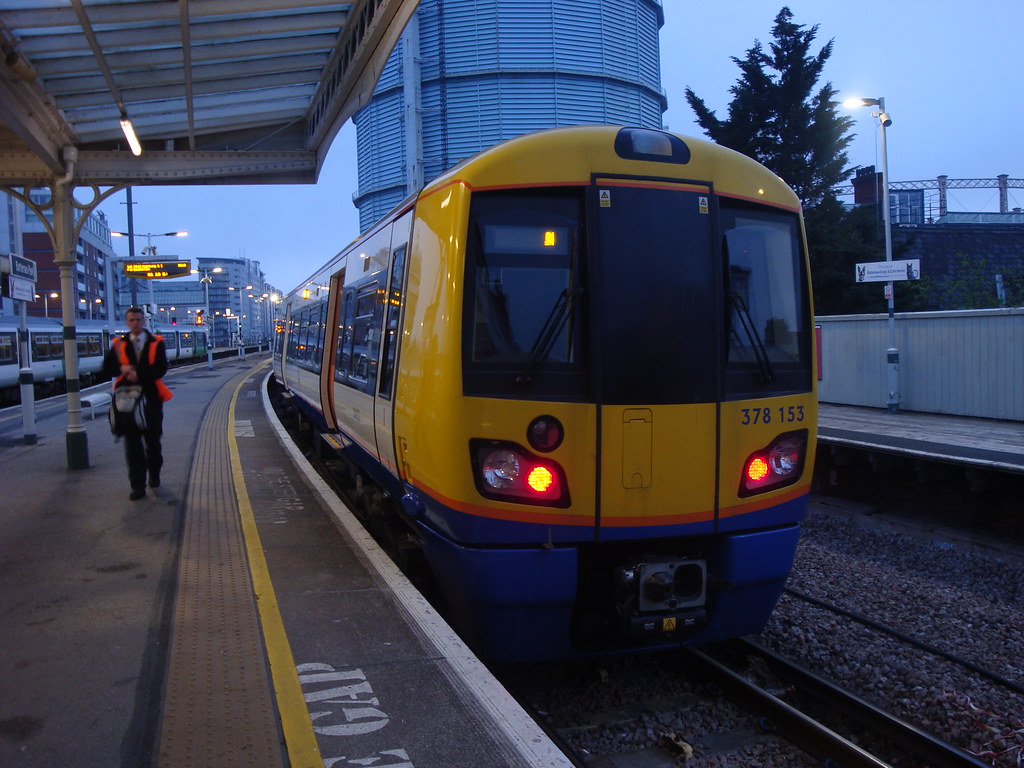
Better Photo of London Overground 378153, Battersea Park
378153 at the Overground's unofficial 84th station,
Battersea Park.
CC Aubrey.
The East London line was extended to Highbury & Islington via the Dalston West Curve in 2011 and the much-anticipated orbital railway was achieved in December 2012 when the final leg of the Overground was completed between Surrey Quays and Clapham Junction via the South London Line.
After all the works were completed and the London Overground network was considered 'finished' it comprised 84 stations, 28 more than it had to begin with. Only 83 are shown on the network map because the 84th, Battersea Park, is only served by a few trains each day either very early in the morning or very late at night.

Your bloggers, Au and Lewis, achieved the London Overground challenge record last year where we visited all 84 stations in 6 hours 40 minutes and 20 seconds, but this was beaten only a fortnight ago. It appears that another challenger has also completed the challenge with the new 112 station setup, in a time of 10 hours 24 minutes and 29 seconds.

------------------------------------------------------------------------------------------------------

On 31st May 2015 the London Overground network expanded greatly to now include services previously operated by Abellio Greater Anglia from Liverpool Street to Enfield Town, Cheshunt and Chingford, along with the tiny shuttle between Romford and Upminster via Emerson Park Halt.

Many were not looking forward to this transition because people thought it would make the tube map a mess, with the north-east section of the map busier than the central area. There were many rumours afloat, including a complete redesign of the map was underway or that the London Overground would start to appear in different colours to represent the different lines, but none of that was correct: the new map is the same as the old but with added orange out of Liverpool Street (and, of course, the single line of TfL rail which in a few years will become Crossrail).

On the day of change there was not much to report, apart from a small spelling error:
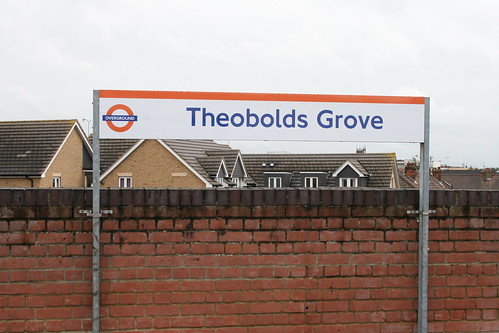
TfL Cannot Spell *Facepalm*
Theobolds Grove is shown on the sign as opposed to the correct Theobalds Grove.
This sign has since been corrected.
© Aubrey.
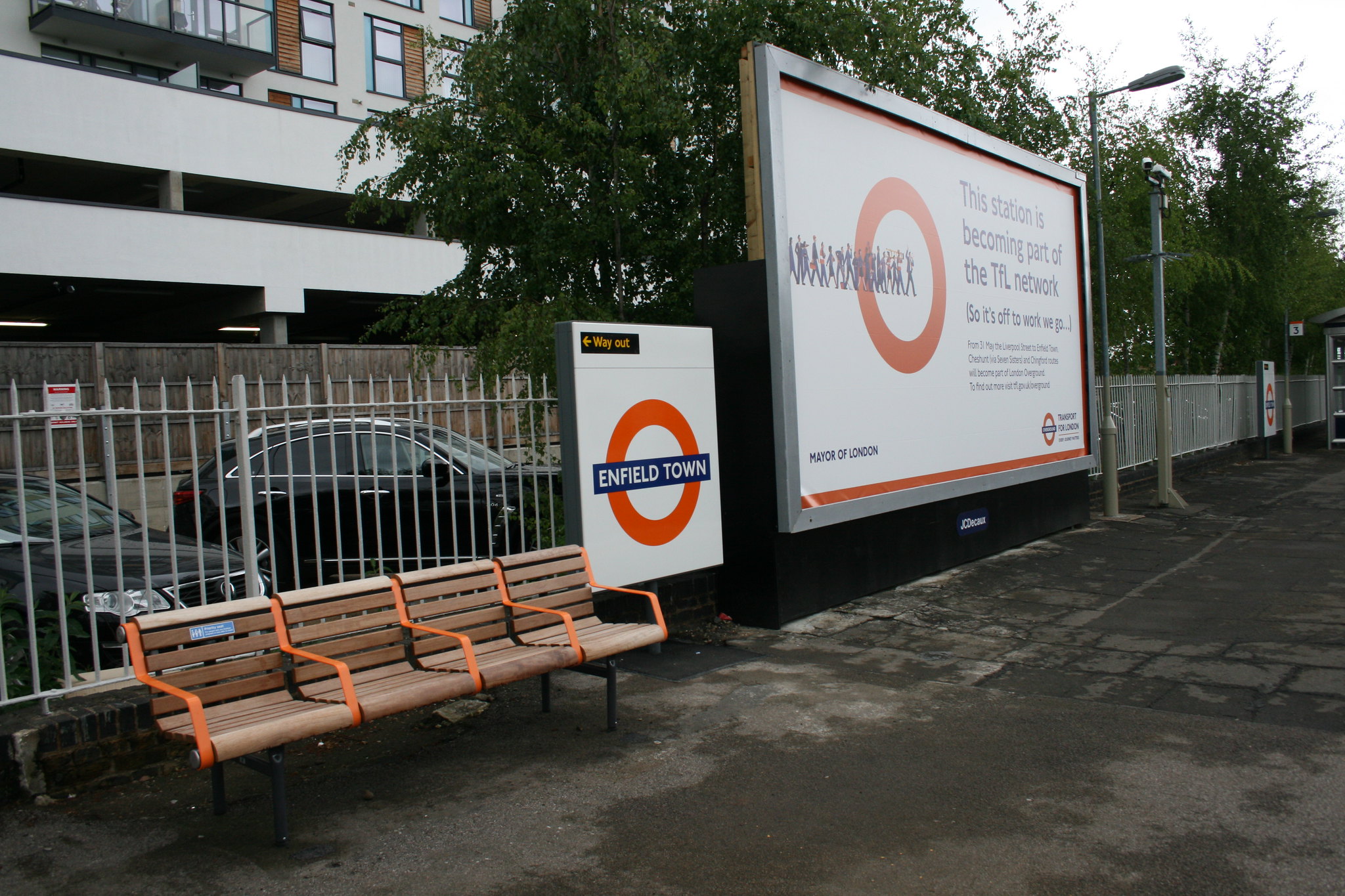
London Overground signs appeared at all the various 28 stations along the line, and unlike the takeover of the Silverlink lines they don't have 'Temporary Sign' in black at the bottom right corner.
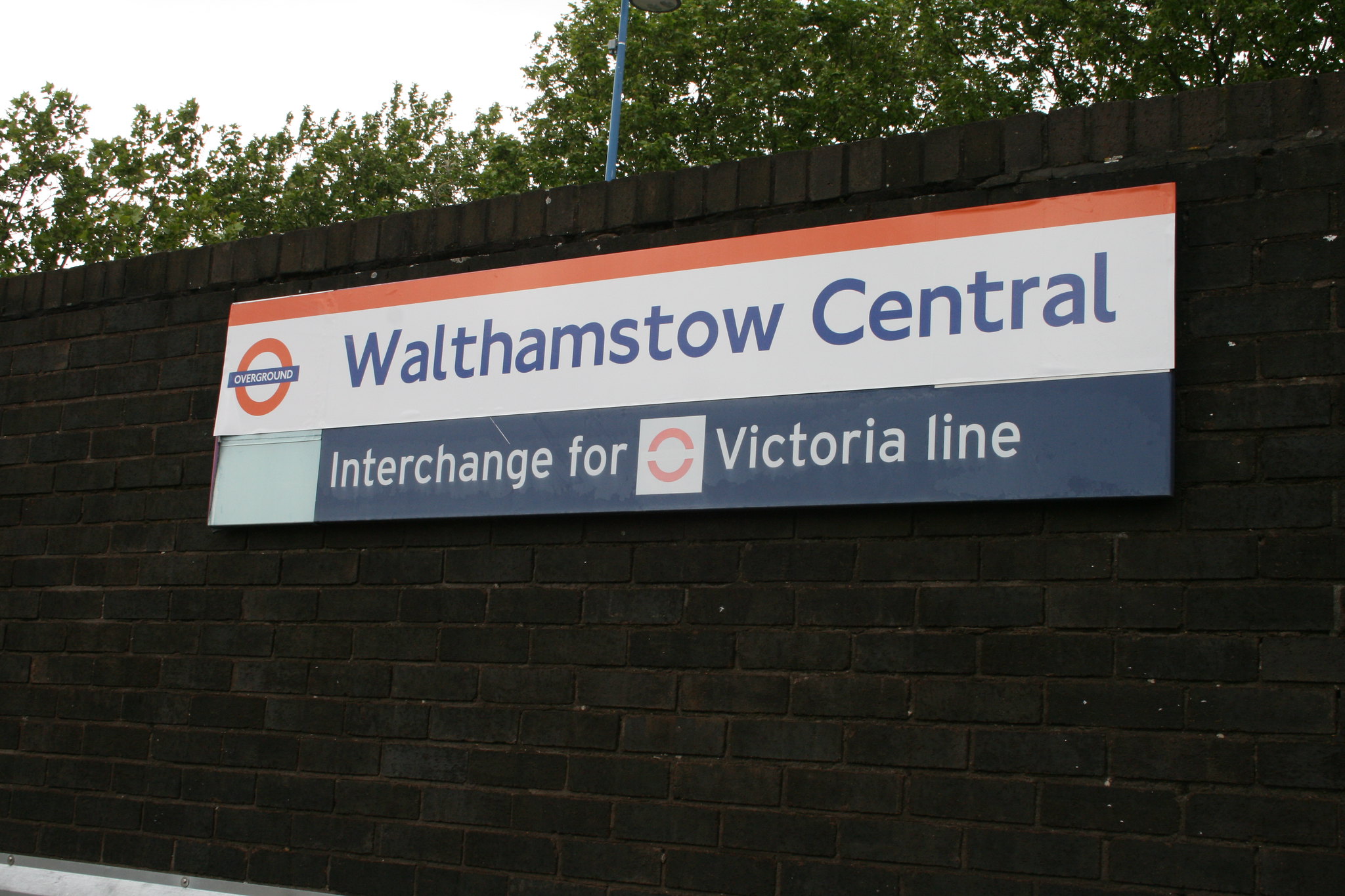
Old and New Stickers
Old and new signs at Walthamstow Central.
© Aubrey.
Enfield Town was fully equipped with roundels and line diagrams, possibly due to the fact it was the station from which the mayor Boris Johnson would launch the new line the following Monday.
London Overground at Enfield Town
Overground at Enfield Town.
© Aubrey.
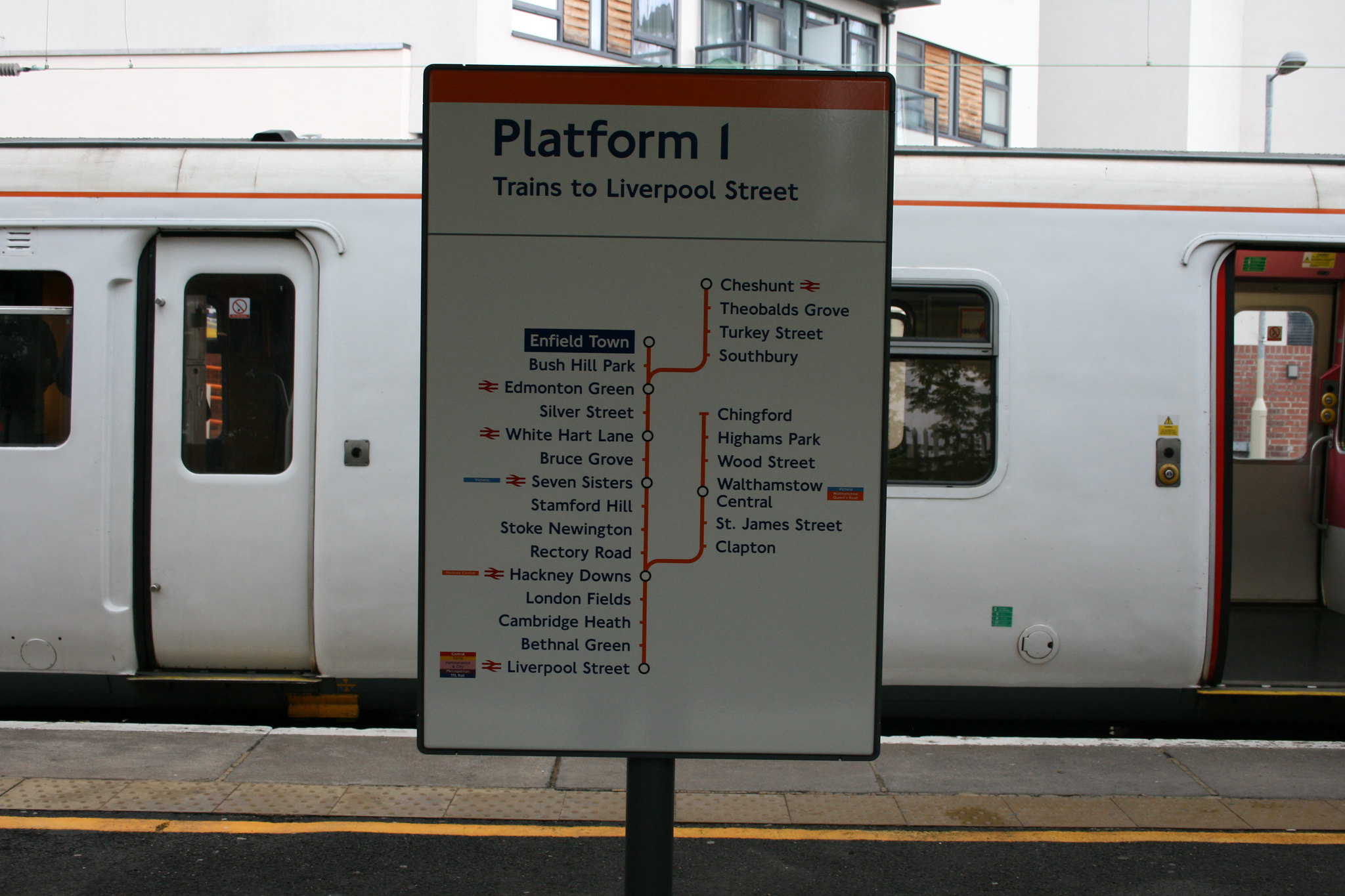
London Overground - Lea Valley Lines Diagram
Enfield Town Line Diagram.
CC Aubrey.


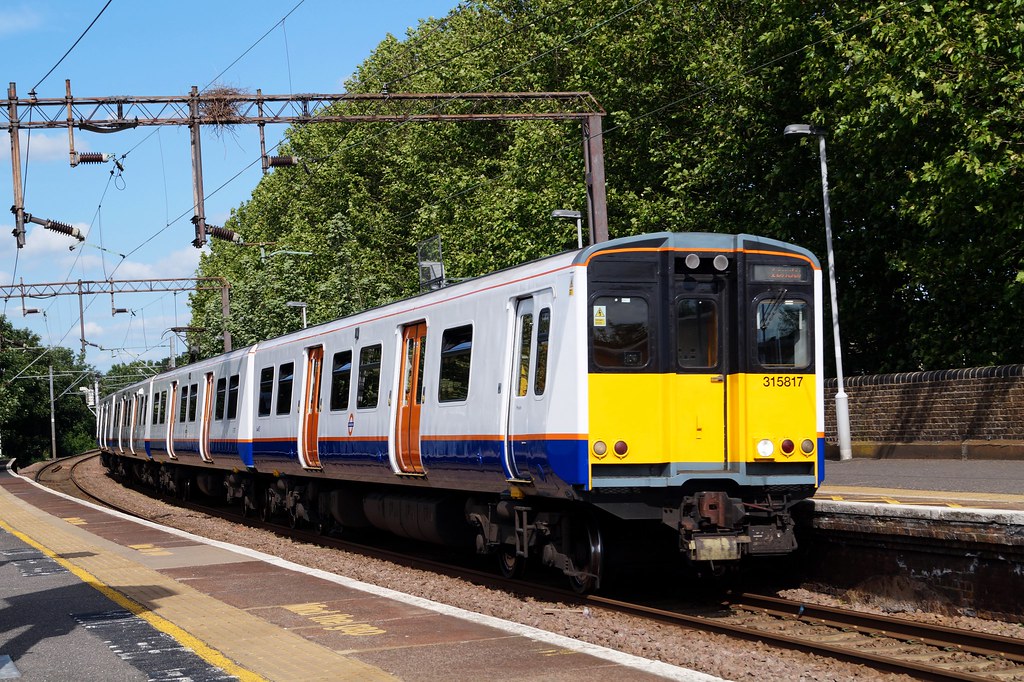
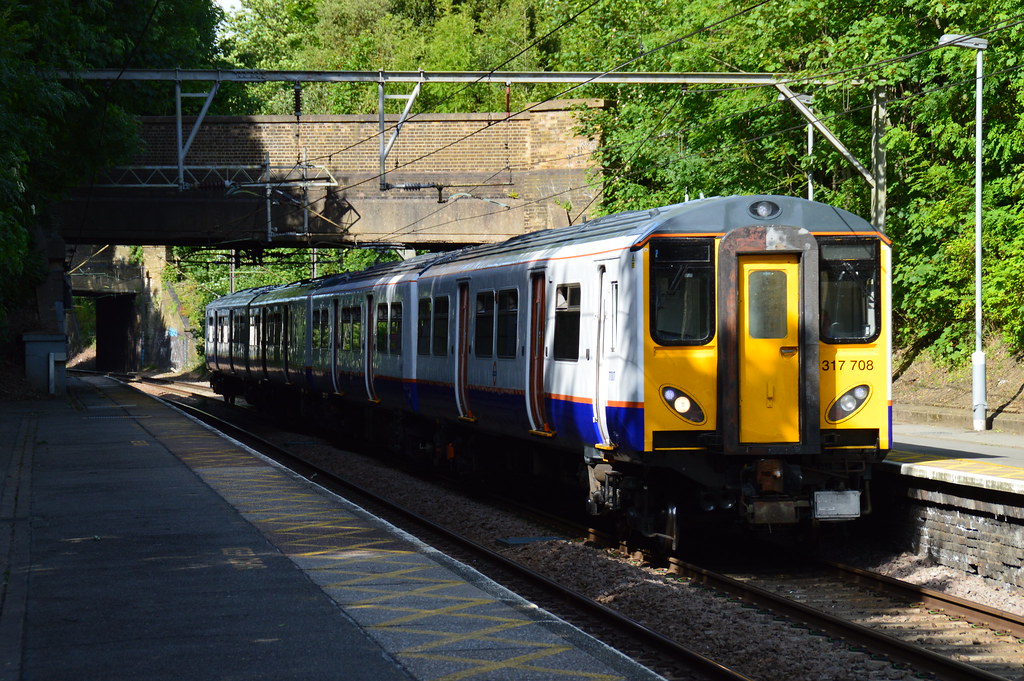
The lines transferred to London Overground with 17 class 315s (315801-817), 8 class 317/7s (317708,709,710,714,719,723,729 and 732) and 7 class 317/8s (317886-892).

315817 and 317708 were both repainted to receive full London Overground livery. The 315 was also reupholstered inside with the typical orange decor. Neither of these were in service on the first day of Overground operation, but both have been in service the following week. In my opinion, both look lovely in the livery and the interior of 315817 is far more welcoming than the units were previously!

Back to Town
315817 arriving at St. James Street.
© Lewis.
London Overground
317708 arriving at Clapton.
© Joshua.
As some of you may have read in recent local news articles such as this one, the takeover of the Cheshunt, Enfield and Chingford lines has been less than successful with constant delays and half the number of carriages on busy peak-time trains. But by looking at a few forums, one can see that there are various reasons for these issues. The main is that the class 315 and 317 units are in an awful undercarriage state - Abellio Greater Anglia have not upgraded or enhanced the units, in fact they've barely repaired the damaged ones. This post shows from a driver's perspective the issues which were uncovered succeeding the takeover of the lines by TFL by exposing units which were previously hidden away as a short-term, rather lazy remedy instead of being invested in and fixed.

It is planned that all 17 units will be re-liveried and the undercarriage heavily renewed in due course to improve the appearance and overall state of the trains. 4-car class 378 units like those currently in service on the rest of the Overground will be introduced in 2019 on the Anglia lines as well as the Gospel Oak to Barking line which is now to be electrified.

Current 378s are also in the process of being lengthened once more, now to 5 carriages, which is complete on the ELL and half-way there on the NLL.
'Every Journey Matters'
I would personally encourage all of you to travel by Overground at some point - the trains are lovely and the routes are scenic; it's just unfortunate that the journeys are somewhat slow due to the Overground's suburban metro nature.

I hope you enjoyed reading this post.