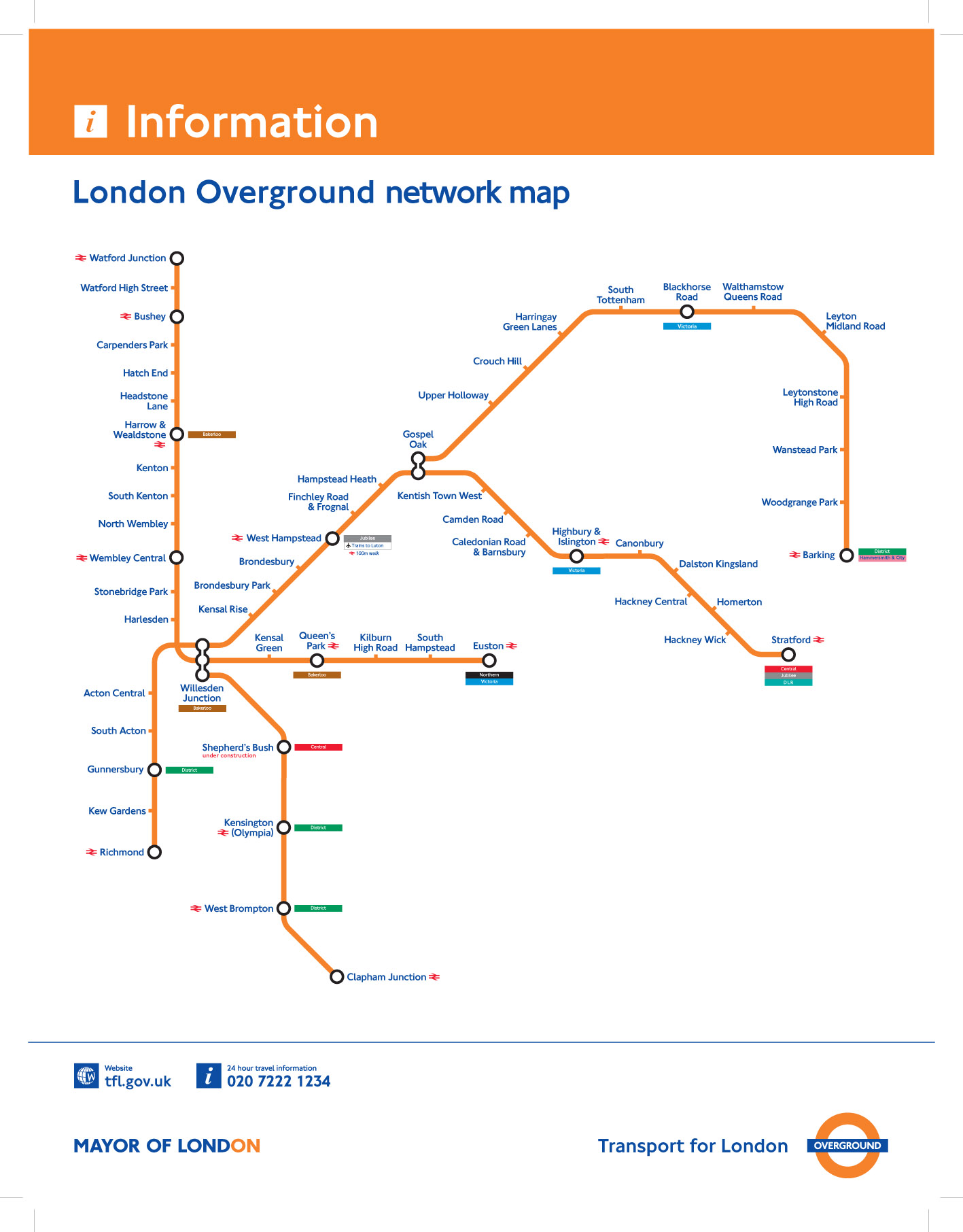
London Overground is only 8 years old but it has now established itself as one of the nicest and most reliable railways not only in the capital but in the entire country with ever-high percentage values on their
punctuality and increasing customer satisfaction ratings.
The story began in 2007 when TFL took on the inner London suburban services operated previously by Silverlink, and this included:
- North London Line: Richmond - Stratford
- West London Line: Clapham Jct - Willesden Jct
- 'GOBLIN': Gospel Oak - Barking
- Watford D.C.: Watford Jct - Euston.
This comprised a whole network encompassing
56 stations and these would over the next 4 years be completely redone with new paintwork (including a vast amount more orange than previously), new facilities, new signage and, most importantly, better accessibility.
In 2007 the lines were equipped with NR class 150, 313 and 508 units which were deep cleaned and had all the Silverlink branding removed; replaced by stickers proclaiming the new branding 'London Overground.'
 |
Class 378s stand at Richmond, 6th April 2013.
© Lewis. |
The
class 378/0 dual-voltage units entered service in 2009 on the NLL, WLL and Watford branch in 3-car formations, completely replacing the 313s and 508s by late 2010. In 2010 the
class 172s were also introduced to replace the 150s on the Gospel Oak - Barking route.
In April 2010 the Overground network was greatly expanded and the completely rebuilt East London Line (formerly part of the London Underground; closed in 2007) opened ahead of schedule between Dalston Junction and New Cross / New Cross Gate. The line made use of the old Broad Street viaduct south of Dalston Junction, and the famous
Thames Tunnel in Rotherhithe built by Brunel which was the first known tunnel to be built under a navigable river. A month later the full line opened south of New Cross Gate to Crystal Palace and West Croydon. The ELL is operated with four-car 378/1s, which unlike the previous units do not feature pantographs and thusly cannot operate on AC-powered lines.
In late 2010 all 378/0s on the original LO lines became 378/2s as they all had a fourth car added. Sections of the North London Line were closed in that year to allow for platform extensions to be build to accommodate the longer trains, and the process was accelerated by the introduction of the ELL sets.
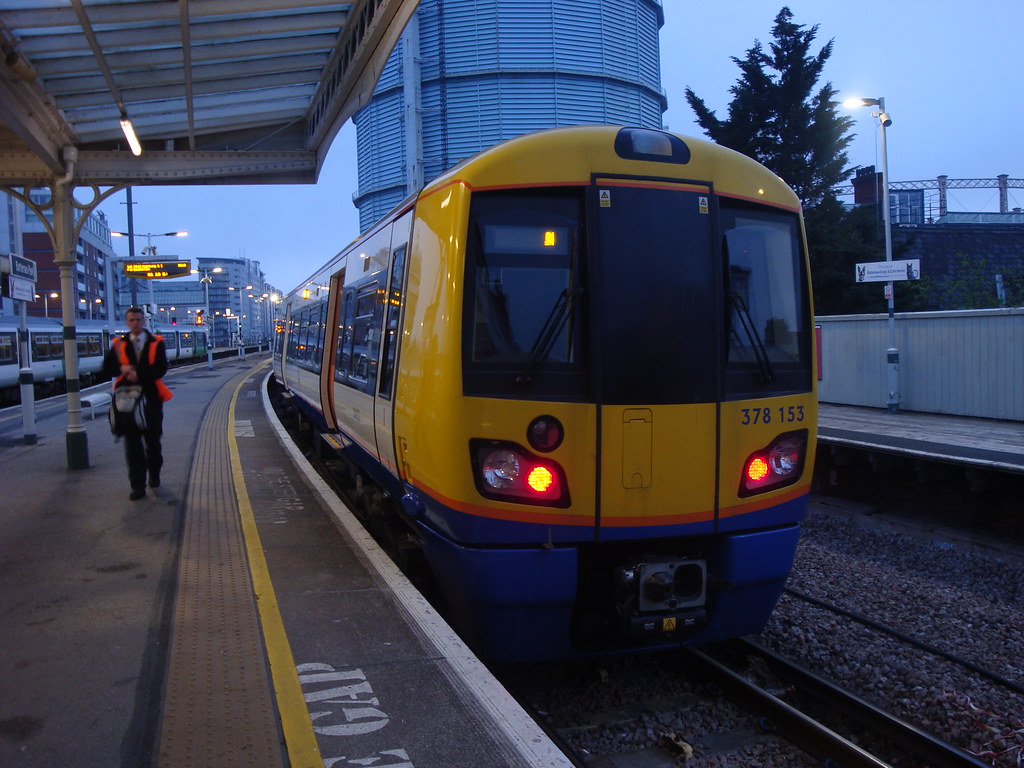 |
378153 at the Overground's unofficial 84th station,
Battersea Park.
CC Aubrey. |
The East London line was extended to Highbury & Islington via the Dalston West Curve in 2011 and the much-anticipated orbital railway was achieved in December 2012 when the final leg of the Overground was completed between Surrey Quays and Clapham Junction via the South London Line.
After all the works were completed and the London Overground network was considered 'finished' it comprised
84 stations, 28 more than it had to begin with. Only 83 are shown on the network map because the 84th, Battersea Park, is only served by a few trains each day either very early in the morning or very late at night.
Your bloggers, Au and Lewis, achieved the London Overground challenge record last year where we visited all 84 stations in 6 hours 40 minutes and 20 seconds, but this was beaten only a fortnight ago. It appears that another challenger has also completed the challenge with the new 112 station setup, in a time of 10 hours 24 minutes and 29 seconds.
------------------------------------------------------------------------------------------------------
On 31st May 2015 the London Overground network
expanded greatly to now include services previously operated by Abellio Greater Anglia from Liverpool Street to Enfield Town, Cheshunt and Chingford, along with the tiny shuttle between Romford and Upminster via Emerson Park Halt.
Many were not looking forward to this transition because people thought it would make the
tube map a mess, with the north-east section of the map busier than the central area. There were many rumours afloat, including a complete redesign of the map was underway or that the London Overground would start to appear in different colours to represent the different lines, but none of that was correct: the new map is the same as the old but with added orange out of Liverpool Street (and, of course, the single line of TfL rail which in a few years will become Crossrail).
On the day of change there was not much to report, apart from a small spelling error:
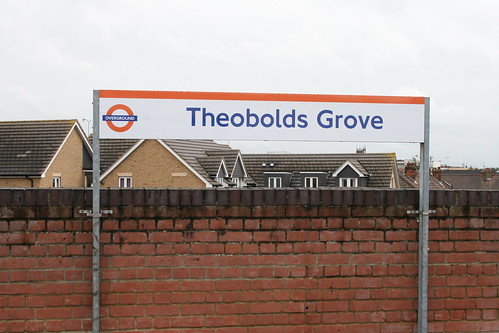 |
Theobolds Grove is shown on the sign as opposed to the correct Theobalds Grove.
This sign has since been corrected.
© Aubrey. |
London Overground signs appeared at all the various 28 stations along the line, and unlike the takeover of the Silverlink lines they don't have 'Temporary Sign' in black at the bottom right corner.
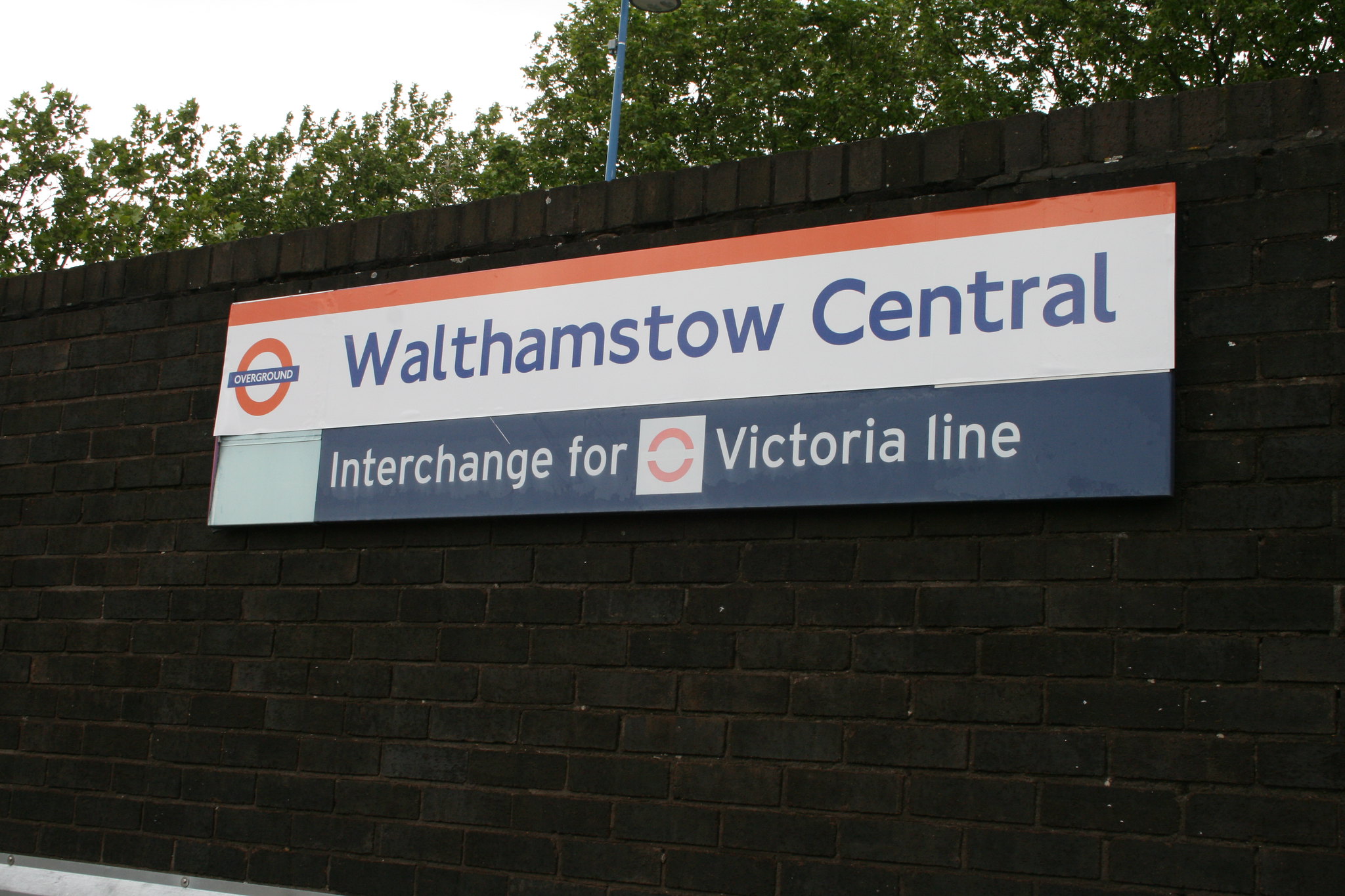 |
Old and new signs at Walthamstow Central.
© Aubrey. |
Enfield Town was fully equipped with roundels and line diagrams, possibly due to the fact it was the station from which the mayor
Boris Johnson would launch the new line the following Monday.
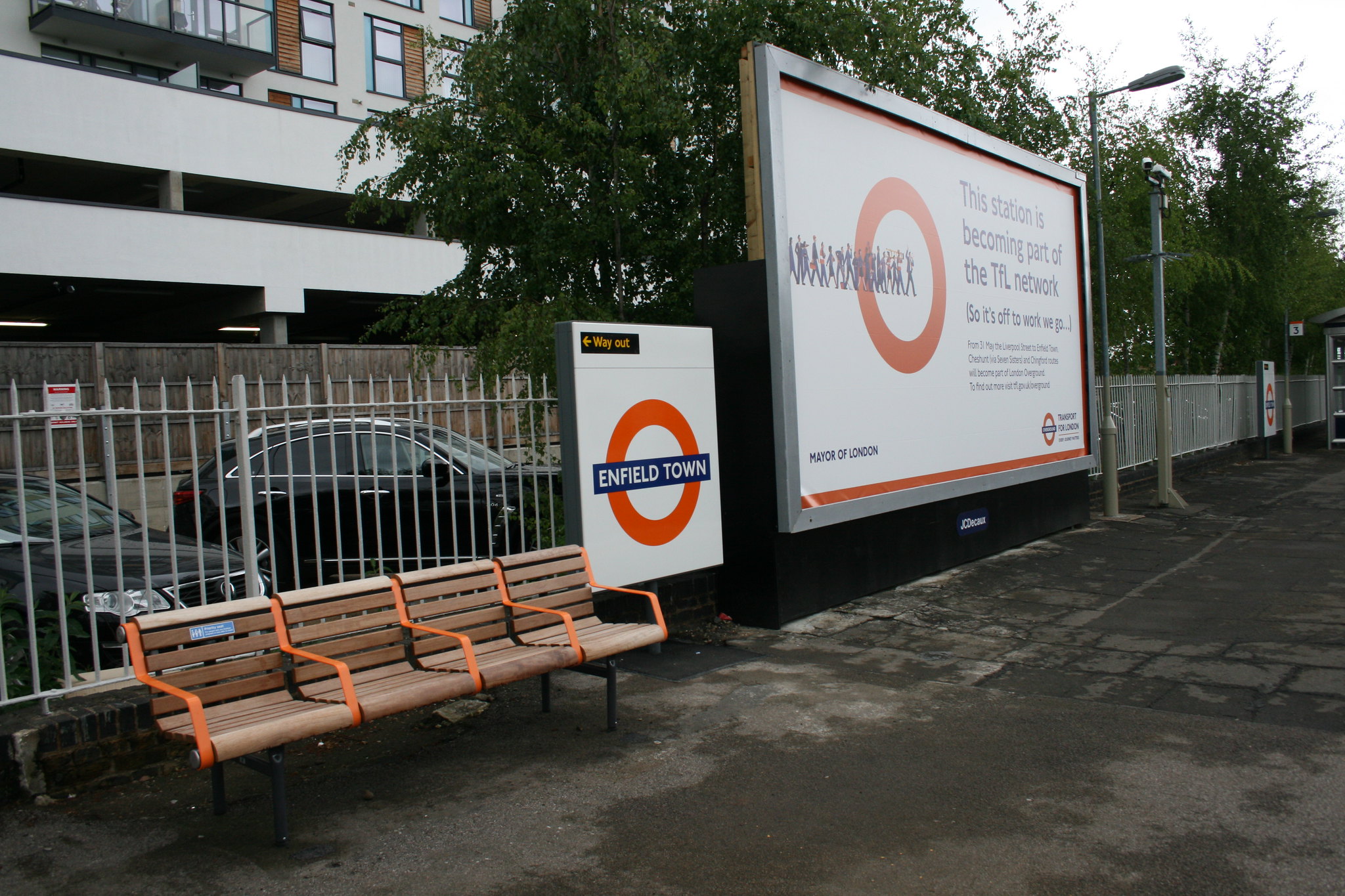 |
Overground at Enfield Town.
© Aubrey. |
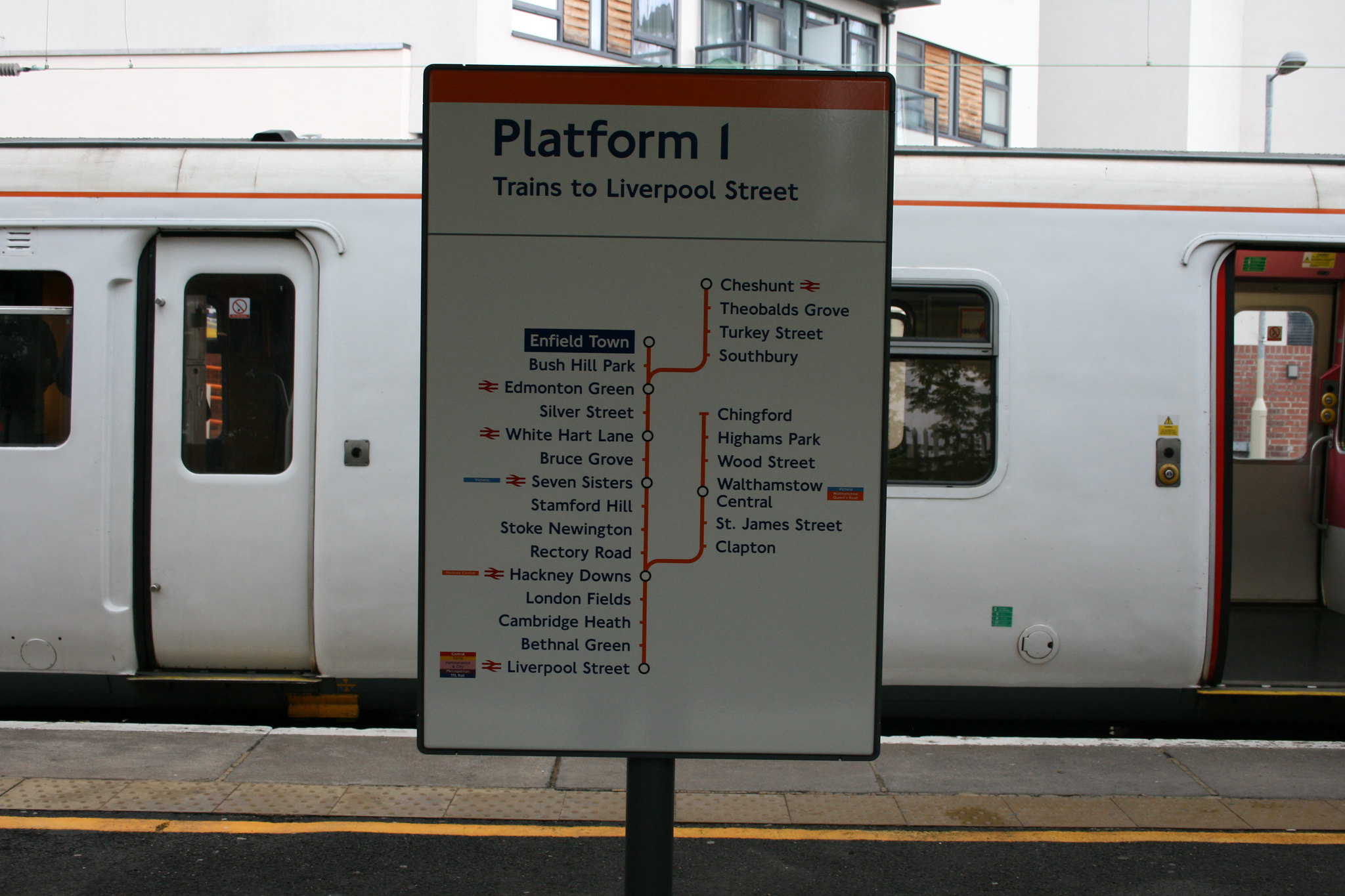 |
Enfield Town Line Diagram.
CC Aubrey. |
The lines transferred to London Overground with 17 class 315s (315801-817), 8 class 317/7s (317708,709,710,714,719,723,729 and 732) and 7 class 317/8s (317886-892).
315817 and 317708 were both repainted to receive full London Overground livery. The 315 was also reupholstered inside with the typical orange decor. Neither of these were in service on the first day of Overground operation, but both have been in service the following week. In my opinion, both look lovely in the livery and the interior of 315817 is far more welcoming than the units were previously!
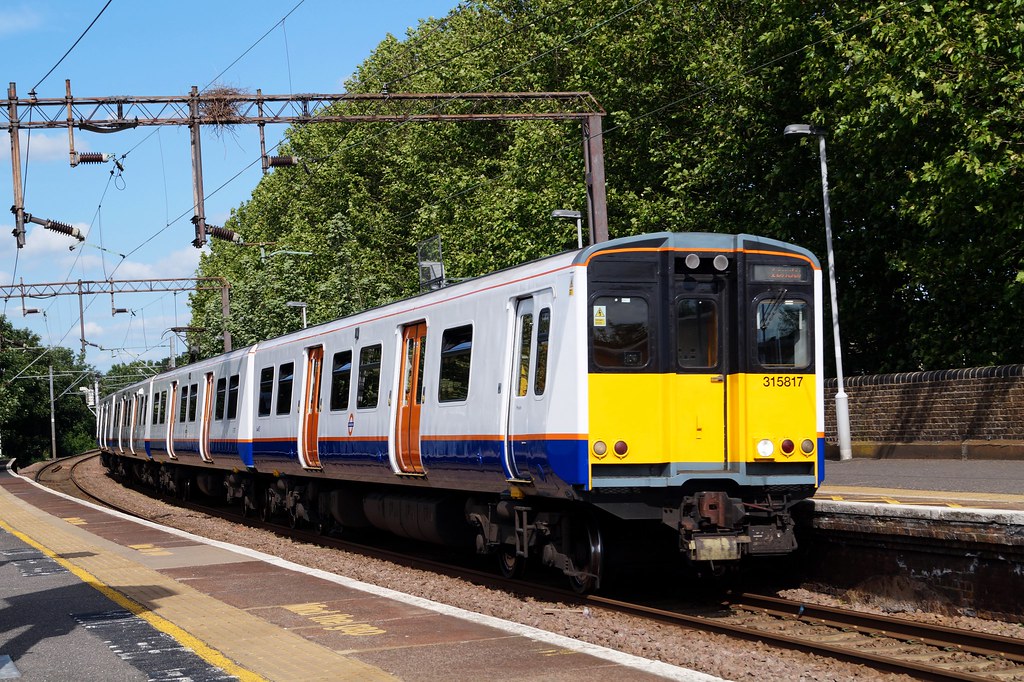 |
315817 arriving at St. James Street.
© Lewis. |
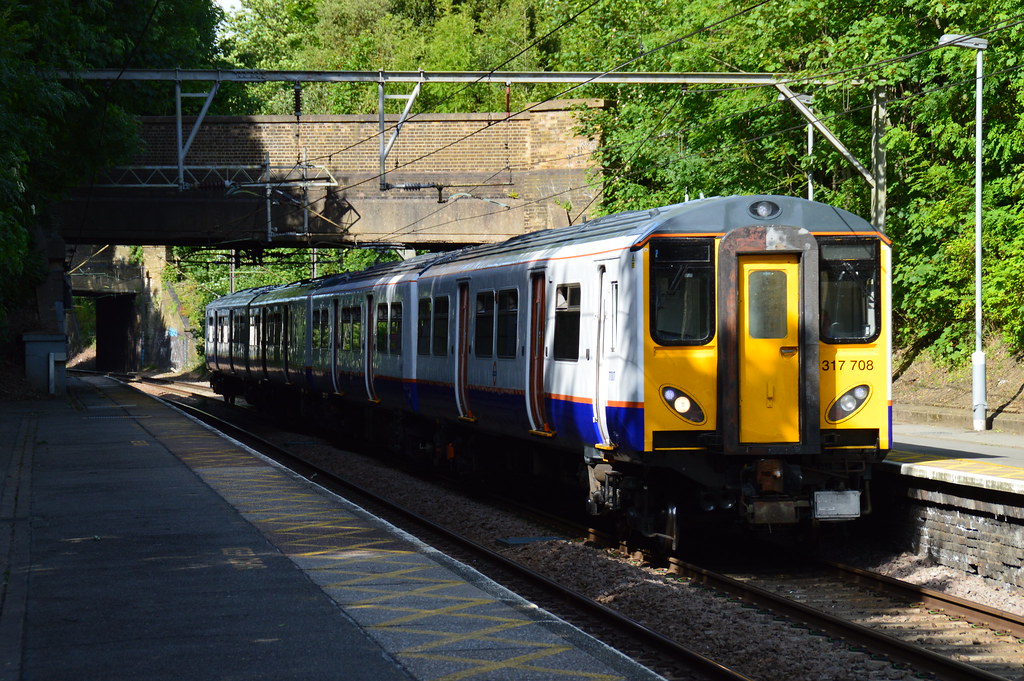 |
317708 arriving at Clapton.
© Joshua. |
As some of you may have read in recent local news articles such as
this one, the takeover of the Cheshunt, Enfield and Chingford lines has been less than successful with constant delays and half the number of carriages on busy peak-time trains. But by looking at a few forums, one can see that there are various reasons for these issues. The main is that the class 315 and 317 units are in an awful undercarriage state - Abellio Greater Anglia have not upgraded or enhanced the units, in fact they've barely repaired the damaged ones.
This post shows from a driver's perspective the issues which were uncovered succeeding the takeover of the lines by TFL by exposing units which were previously hidden away as a short-term, rather lazy remedy instead of being invested in and fixed.
It is planned that all 17 units will be re-liveried and the undercarriage heavily renewed in due course to improve the appearance and overall state of the trains. 4-car class 378 units like those currently in service on the rest of the Overground will be introduced in 2019 on the Anglia lines as well as the Gospel Oak to Barking line which is now to be electrified.
Current 378s are also in the process of being lengthened once more, now to 5 carriages, which is complete on the ELL and half-way there on the NLL.
 |
| 'Every Journey Matters' |
I would personally encourage all of you to travel by Overground at some point - the trains are lovely and the routes are scenic; it's just unfortunate that the journeys are somewhat slow due to the Overground's suburban metro nature.
I hope you enjoyed reading this post.